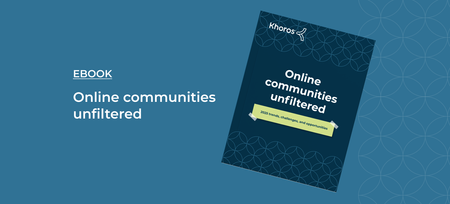
Online communities unfiltered: 2025 trends, challenges, and opportunities
We won’t sugar coat it — managing an online community is hard work. But the payoff of getting it right is unmatched. In this unfiltered guide, you'll get real-world insights and practical strategies from over 15 different industry experts on how to help your community thrive. In this guide, you'll learn: Trends shaping online communities — from tech shifts to evolving member expectations. The challenges community leaders are facing and how to navigate them without burning out. Actionable steps to drive engagement and business impact. Read the eBook here! 535ViewsSign in to react to this post
 0Comments
Great SEO Builds Community, and Great Community Improves SEO
Plant the seeds of a flourishing community with SEO. Just because you built it in the digital world doesn't necessarily mean the people will come. Communities across the digital sphere are dependent on the life-blood of traffic. A thriving community is often based solely on user traffic. Traffic can come from various sources: Twitter ads, Facebook posts, in-app guides, word of mouth, etc. But thanks to the infinite knowledge of Google, chances are high that your customer found your community page through a Google search. According to the website world wide web size, there are roughly 20 billion web pages searchable by google. For reference, if every page contained an average of 500 words, and someone was to read every page at an average pace, it would take them 170,000 years to read every page. 170,000 years ago, humans had only recently started to wear clothing. It's important to remember that roughly 250,000 new web pages are created every 24 hours, according to siteefy. SEO is one of the most rudimentary and genius solutions to cut through billions of pages in this information-dense world. SEO can supercharge your community Ask any digital marketer, social media manager, or even the garage band blogger about increasing web traffic, and you'll hear those three sacred letters; SEO. Search engine optimization is equally complex and simple. There are two types of SEO, on-site SEO and off-site SEO (aka link building.). On-Site SEO is search engine friendly, optimized titles, good descriptions, well-formatted URLs, correct use of H1, H2, and images, SEO titles & descriptions. Off-site SEO refers to actions taken off your website to boost traffic. It could be people sharing your website or getting referred from social media or other services. This aspect of SEO can be slightly troublesome as you will not have the same level of control compared to on-site. However, when it comes to community SEO, if you have done everything right, your users and customers should be working as off-site influencers for your brand. There are a plethora of various SEO strategies in the wild. A great place to start is our best practices article hub here. User content drive SEO more than branding. Community SEO is a massive game of push and pull. You need good SEO to draw new users into your community, and you need dedicated users in your community to continue driving SEO. This idea might feel clear as mud, so here's our Khoros resident SEO and community expert Allison Fasching on why community SEO is vital to success. "The inherent properties of an online community contribute directly to higher SEO value, but it's imperative to understand how search engines work and ensure you are configuring your community in the most efficient way to improve SEO continually. For example, user-created content gets a much higher SEO value than brand-created content because it's a more natural language and happens more often. In other words, when users create content, search engines give that content a higher value than when brands post content." This doesn't mean that brands shouldn't be posting any brand content. That could be a misstep as it's essential to balance the workload on users and brand managers to keep a community alive and thriving. The important thing to remember is that user content will naturally receive a higher SEO score, but that doesn't mean that branded content can't or won't receive an equally high SEO score. ROI's of high SEO scores on communities. Traffic drives sales, questions, answers, and authentic customer engagement with your brand. Almost every aspect of your digital engagement strategy could be improved by having a successful community. Thanks to SEO, customer care agents' volume could be reduced by having engaged community users answering frequently asked questions. The sales team will most likely see massive increases due to community traffic. At first glance, this sale's aspect doesn't make sense. How would high user traffic mean higher sales? The answer could be attributed to basic human nature. Digital or in-person, a community is simply humans connecting around a shared interest or problem. Highly engaged users in a given digital community will recommend various products, generate buzz around a new product or service release, and act as "micro-influencers" for your brand. People will sell for you, and your SEO score will improve as more people talk about your brand online. The bottom line SEO is tricky; the old model of simply spamming keywords for search engines to pick up on is ending. Scores are more complicated, and users are becoming warier of paid placement for brands. Using your community to improve your SEO and using your SEO score to build your community is becoming more vital and, interestingly, more complicated than ever, but Khoros is here to guide you! Now that you know the importance of community SEO, continue your knowledge with these Khoros resources. Best Practices for building SEO in Communities FAQ's on Khoros SEO Connect with Allison Fasching for expert advice7KViewsSign in to react to this post6CommentsTaking Dr. Micheal Wu’s Gamification Theory into the Real World
Years ago, long before Khoros was Khoros and was simply Lithium technologies, a rather curious and beautiful theory was introduced into the world of digital communities. The idea was that if you added some version of gamification and the proper motivation to community users, the digital community would outperform most of its competitors. Gamification floats through various strategies and online communities, but what exactly is gamification in the context of digital communities? In as few words as possible, it is the process of rewarding users with digital badges and increased access or features in the community. Gamification is a prime example of using extrinsic rewards versus intrinsic rewards to influence more people to use a community page. Former Lithium data scientist Dr. Michael Wu explored this concept concerning gamification back in 2014. All of Wu’s findings are far beyond the scope of this one article, but in short, Wu theorized that you could use both intrinsic and extrinsic rewards in the gamification of a community page. If you are not familiar with intrinsic and extrinsic motivations a nd rewards, Wu said it best in his original article: “An intrinsic reward is an intangible award of recognition, a sense of achievement, or a conscious satisfaction. For example, it is the knowledge that you did something right, or that you helped someone and made their day better. An extrinsic reward is an award that is tangible or physically given to you for accomplishing something. It is a tangible recognition of one's endeavor. For example, it’s a certificate of accomplishment, a trophy or medal for winning the race, a badge or points for doing something right, or even a monetary reward for doing your job.” This theory applies to almost every single human interaction or action. The key difference between the two motivation and reward systems is longevity. Generally speaking, intrinsically motivated people will almost always continue to perform an action or task. A great example of this is the super users of a community page without any game theory applied. The super-users will continuously engage with a community page because they genuinely love to use the website. However, according to the Nielsen group, only 1% of all website users will seriously contribute to the page. For the other 99% of the community, the question that Wu was aiming to answer was what would motivate them to start engaging with the website. His answer was to use game theory to increase extrinsic rewards and motivation. This can be done simply by adding more features, rewards, and badges that you can proudly display as a community user. Khoros customer Pandora did this exceptionally well. So, what exactly did Pandora do? Pandora embraced game theory in a wonderfully organic way. At the start of introducing the Pandora community, users were already looking for ratings. By adding a simple ranking system, Pandora could tap into extrinsic motivation models found in most humans. A simple need to be recognized in a social setting. The following elegant practice Pandora put into place was giving greater access to their super-users. Within the first months of launching the Pandora community, the community manager, Erick Linares, noticed that a specific user was fully invested in using the community. This super-user was already displaying intrinsic motivation to use Pandora. In turn, Linares gave this user a moderator role and seriously increased access and judgment to what can and can’t be published or discussed on the website and other traditional moderator rules. The result for Pandora was an upswing in relationship building between other community users. This technic refers to Michael Wu’s theory on extrinsic versus intrinsic motivation. Using the community made users feel good. By feeling good, the user set off to build new digital relationships, which made them and their new digital friends feel good, creating a positive user feedback loop of both intrinsic and extrinsic rewards and bringing people together in the Pandora community. Watch this webinar to learn more about how exactly Pandora built their community with Khoros! How to translate rewards to other styles of communities It is a fair assumption to say that Pandora had a much simpler time energizing its user base. Everyone loves music, and having a place to talk about their favorite artists or events or using the community to solve software issues will naturally draw people in. However, few people will choose to use a community that centers around laundry detergent. If a non-entertainment brand aims to reach the levels of engagement as a brand such as Pandora, this would be a big step. If you are an electronics or household appliances brand, building a well-designed and highly functional community page is still wise. It’s smarter to focus on extrinsic rewards for your customers and employees. It’s vital to focus on the extrinsic rewards of a household appliance community because chances are high that your community base is logging into your website for direct support questions and not much else. So, if your community base is only going to log on when there is a problem, how could you get them to return to the website continuously? According to Wu and game theory, adding something as simple as a badge system for those who give the best answers or answer questions the most could be a good start in giving people great extrinsic rewards and motivation to log back on. To add to Michael Wu’s theory and gamification, video games provide further evidence that game theory could be the missing puzzle piece in increasing community engagement. Originally published in the Computers and Human behavior scientific journal, a group of researchers questioned how reward systems would influence test subjects while playing a simple video game. Their findings speak for themselves: “We found that the high rewards condition (with the greatest amount and diversity of rewards) was rated by players as being the most enjoyable, creating the greatest sense of presence and immersion, and causing them to expend the most effort while playing. Interestingly, the differing amount of rewards did not seem to influence players’ sense of competence nor tension while playing.” While it can be a challenging balance of providing a well-designed community while not making it too much like a ‘silly’ game, the researchers' findings prove that most people enjoy as many rewards as reasonably included. The Khoros Effect Khoros is known for building outstanding communities. Pandora, Samsung, and various travel brands are built on Khoros’ ability to build communities. A complete how-to guide to build your community from scratch is far beyond the scope of this article, but as you sit down with your brand’s team and the Khoros professional service team, keep in mind what Michael Wu and Pandora did by transforming your community user’s motivations. Explore more Khoros Resources to learn more about digital communities! Intrinsic vs. Extrinsic Rewards (and Their Differences from Motivations) Do You Even Deserve It? - Atlas Khoros and Pandora Community webinar4.3KViewsSign in to react to this post1CommentState of Community Management 2023 Report: Biggest Takeaway
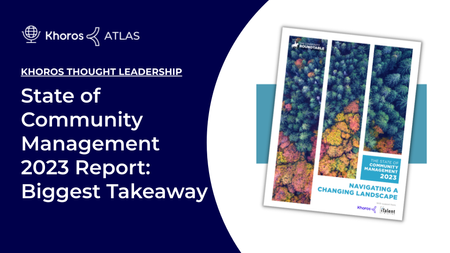
In today's dynamic online community landscape, staying informed about the latest trends, challenges, and best practices is crucial for community leaders who seek lasting success. Discover the valuable insights and recommendations in The Community Roundtable's 14th annual report, The State of Community Management 2023, tailored specifically for community leaders. This report is a goldmine of tactics and strategies to enhance your strategic community planning and ensure your online community remains effective. We highly recommend you take a dive into the full report to get all the best insights, but here we’ve provided the top takeaway to help your community thrive in the ever-changing digital landscape. Harness the power of evangelism With the myriad of responsibilities shouldered by community managers, internal evangelism often takes a backseat. However, simply advocating for the value of a community may not be enough. It's imperative that the community manager isn't the sole voice singing the praises of the community within the organization. In The Community Roundtable’s research, 90% of best-in-class communities surveyed reported positive perceptions from executives. So how do you foster this support from leadership? Start by coordinating efforts and identifying team members who can act as champions to get support from middle management and executives. Holding the interest of stakeholders is essential to the long-term success of any community program. Why is internal buy-in so important? To start, building a thriving community is difficult. Not every business considers it a necessity, and some stakeholders may view it as a nice-to-have rather than a mandatory investment of time and resources. Tailoring your communication to different teams within the organization is key. For example, marketers tend to care about how a community can grow its audience or generate positive sentiment, while product teams care more about how the community will help them receive feedback from customers and further innovation. When each department understands its role in community building, they can allocate the necessary efforts and resources for a healthy and successful community. Above all, never stop evangelizing — seize any opportunity to speak to others within your organization about your community program. Although this can be challenging with the growing prevalence of remote work, make sure to communicate your message whenever and wherever possible. The more community evangelists who understand the language of community, the easier it becomes to promote the program throughout the organization. Take advantage of The State of Community Management 2023 to stay up-to-date on community management best practices, trends, and strategies. Download the full report here to learn how to navigate impending challenges and lead your online community to thrive in the months and years ahead.2.3KViewsSign in to react to this post0CommentsExploring AI Use Cases in Khoros Communities
Welcome to the Khoros view on our future with AI! It really is an exciting time for online communities in many ways, but we are just at the beginning of exploring how this technology will impact how we work in communities. At Khoros, we have been hard at work on Aurora, our next generation of online communities. While we have focused on our new technological foundation, natural language processing, and large language models have come to dominate the conversation in tech. Naturally, this has led to plenty of exciting discussions about the future of online communities. With Aurora, we are focused heavily on developing robust API’s, decoupling the UI from the backend of our platform, and building modern app experiences that will enable us to quickly tap into future trends in technology, whether it’s the metaverse or generative AI. What is Khoros working on now to further innovation in this space? There is much to explore with generative AI as it is still very new, but we will experiment and are planning on incorporating new technologies into our products. “One of the biggest initiatives we are working on is an orchestration layer for customer engagement that sits between these services and direct engagement with users offering the ability to control the use and workflows of that engagement. Whether it's easily swapping or testing new services, or putting the technology in front of humans to experiment and refine, we believe this will be a critical component of enabling and controlling the many use cases that these services make available.” - Nick Hill, VP, Product - Communities at Khoros There are some focus areas for us in product development with the application of generative and conversational AI. The most notable is the relationship between community-generated content and self-service / discovery. Five out of the top 10 sites on the internet today are communities of peer content. Communities rely heavily on SEO to index this content and on searches to drive traffic to the community. Generative AI offers a new approach - but it's still heavily reliant on the continuous sharing of user generated content. With the incredible scale of 18M new posts per year and hundreds of millions of solution views across all Khoros communities, the fundamental need for experts to share, and the need for others to find is unchanged. However, the approach of crawling and links will shift to summarization and intelligence responses. Some exciting new capabilities will be to build on your query, or to generate questions where knowledge is insufficient. Another opportunity we have is exploring the improvements for content moderation. Generative AI tools can help us better caption and classify images and text, which reduces the need for manual moderation and helps improve moderator mental health. This addresses spam and inappropriate content in new ways and adds much more to the moderator's set of tools. However, we’ve also seen ChatGPT, among other Generative AI tools, used to increase human-like content spam in communities for nefarious purposes. Consequently, focus on these tools and implementation of guardrails around these tools is paramount to the success of community moderation going forward. Content is key in every community, and the focus should absolutely remain on human-created content. When it comes to the content generation space, brand communities are often specialized knowledge sources and their existing content can help fuel creation of new content such as guides on how to use a product, marketing materials about use cases, value stories, etc. The usage of these tools depends on the expertise and validation of humans. These tools can be leveraged for suggestions on how to improve the content, tag your content for search optimization, and help guide you to follow the community guidelines. Generative AI is better suited to aiding humans in the creation of valuable content versus being used solely to generate the content—especially given how prone to errors it can be at this point. Personalization on the user front is another very important use case to consider as we work toward leveraging AI tools to surface content relevant to the users’ interests. Beyond the end-user impact, we’re also exploring the potential impacts in the community management front. Managing relationships with your community is key to your success. We see possibilities to apply AI to the user onboarding process as well as tracking and bolstering engagement with your most active, loyal users. Imagine being able to derive analytics, insights, and trends all relevant to your query. This knowledge would give you more power in determining your community strategy and help direct you toward your next steps. Understanding your users’ sentiments and challenges, along with surfacing the most impactful tasks you can focus on, will be key to supporting community management in the future. Additionally, we are exploring support use cases with agents. Agent efficiency is a key metric for any enterprise. Therefore, we are seeking to combine knowledge in the community with previous agent responses to better assist agents in resolving cases quickly and accurately. We are investigating suggested responses, incorporating community knowledge to better assist agents, and exploring the ability to summarize a case and transform it into reusable knowledge that could be posted back to the community for self-service. For example, in a marketing use case, we are investigating how to generate content of different lengths and keywords to publish across channels, including recommendations on how to tag and when to publish. We’ve been working on automation, text classification and NLP for a long time and they are key parts of many of our solutions. With that existing framework, there is plenty of opportunity at Khoros to continue to integrate AI technologies in our products, and we are very excited to work to include these tools in Communities. The importance of having a platform, generating content, and strong community experiences focused on engagement with extensible platforms like analytics, metrics API, and firehose all provide us with the right foundation to ensure brand communities and user-generated content continue to play a leading role in the future customer experience. What are you most looking forward to seeing happen in the community platform? What are some challenges you are facing today? Let us know your thoughts in the comments! Join the discussion on these great topics in the Atlas community! Looking into ChatGPT, what types of use cases/ideas are you coming up with? - StanGromer We built a bunch of stuff - Unified search & Zendesk, ChatGPT, and Coda.IO integrations - StanGromer Impacts on Community from AI Chat GPT - akloepfer Check out our podcast episode covering The Future of Conversational AI, with Khoros’ Gijs Van De Nieuwegiessen.6.2KViewsSign in to react to this post2CommentsThought Leadership + Outcome Keywords: A New CX Initiative
A common request from Khoros Customers is having more insightful content to drive future strategies in an ever-changing industry. We've heard loud and clear in our recent NPS surveys that you're interested in more thought leadership. The Khoros Customer Engagement team has been hard at work developing content with a fresh outlook on modern solutions and paths to follow as you continue your journey. With these updates, we aim to help you transform theory into practice using the Khoros platform. We will continue to strive to deliver you the insights you need to succeed. Thought Leadership Blogs and Label Outcome Keyword Links Additional Label Tips First, I’d like to highlight our recent content development and distribution initiative. A tool can be used to the extent of the wielder's knowledge. The Khoros platform is no different. The powerful capabilities Khoros offers, paired with the rapid and unexpected shifts in the industry, can feel like going on a fool’s errand trying to stay on top of everything. This is why we launched our unique human-focused thought leadership content to cut through the clutter of vague social tips and misguided strategies. We’re here to bring you the who, what, when, where, and most importantly, the why with all things customer experience and Khoros. We want to ensure Atlas offers our members comprehensive thought leadership and unique content with your future strategy in mind. Stay updated when new content is published by subscribing to the new Thought Leadership Label in the Khoros Insights Blog. You’ll also notice new Outcome Keywords below the labels. Here's how you use these. Labels house the type of content, or in other words - if it’s a thought leadership article, a product update, best practices, or webinars. The Outcome Keywords are used to give you a sneak peek at what that specific content will highlight. For example, an article about how to use TikTok more effectively would fall under the thought leadership label, but its keyword - engagement rate - would highlight the article's focus. You could then explore all other Atlas content that focuses on engagement rate whether it’s an article, forum, webinar, or podcast. In partnership with the Atlas and Enablement teams, we’ve defined all Best Practices and Thought Leadership blogs related to actionable outcomes and included Keywords to help pull together similar content. Each dropdown below contains some outcome keywords that link to similarly tagged content for each Khoros solution. We hope this helps the discoverability of helpful content! Outcome Keywords Marketing Care Community CXI Active platform users Agent Handle Time Accepted Answers AHT reduction Approved and rejected messages Agent Performance Answers Found CSAT Approved and rejected posts Conversations Handled Community Revenue Customer Friction Points CSAT Cost Per Contact CommCSAT Deflection Rate Decreased publishing time CSAT Deflection Rate Increase Efficiency Engagement Growth Deflection rate Ideas submitted Increased Revenue Followers Engagement Rate Minutes to First Reply NPS Increased Revenue Incoming Conversations Engaged CommNPS Reducing Repeat Contacts NPS NPS Posts Posts published natively Resolution rate Resolution Rate Reach SLA Met Returning Users Sentiment TAR Revenue per Member Time saved to pull reports Sentiment SEO Traffic Solution Views Visitors Registering Visits Atlas is more than a website. It’s a living, breathing community full of webinars, forums, articles, podcasts, and thousands of members looking to advance their knowledge. Due to Atlas's impressive size, we recommend utilizing labels listed beneath blog titles to customize your automated Atlas knowledge flow and explore the content most relevant to you and your organization’s goals. Our community labels have been set up to describe the type of information you can expect from blogs, and clicking on them leads to other similar blogs. We recommend subscribing to Podcast, Industry Trends, and Highlights in the Khoros Insights area, as well as Best Practices and Product updates for your Solutions. Marketing Blog Product Updates Best Practices Care Blog Product Updates Best Practices Communities Blog Product Updates Best Practices CXI Blog Best Practices How about letting us do the work finding resources for you? Sign up for Customer Engagement emails to receive blogs and webinars curated for you directly to your email!3.9KViewsSign in to react to this post0CommentsThe Metaverse and Online Communities: Khoros 101
“Metaverse” is a term first coined by Neal Stephenson in his 1992 science fiction novel Snow Crash, captured the imagination of emerging generations and has gained unsurprising traction in recent years. From fully digital lives in online worlds, like Second Life, to a plethora of movies like Ready Player One, each provide a glimpse into what the metaverse could mean and how it could play a part in our daily lives. As we’ve seen, the mission, vision, and values that we hold for our futures are the premise of how these new worlds emerge. It’s not hard to find media covering the topic of virtual worlds, they are real, they exist now, and yet there is so much we have yet to see as far as technological developments in this area. The current understanding and experience of the metaverse varies. Although Meta (formerly Facebook) is creating its own “Metaverse” it is only one of many such projects. There is Meta, the brand, and there is the all-encompassing term, metaverse, which essentially means multiple worlds enabled through augmented and/or fully virtual experiences, where people can interact, work, play and more. Brands, opportunities and partnerships are ripe across this ever-growing ecosystem — many organizations are currently building out similar and novel virtual experiences for work, commerce, entertainment and more, across a spectrum of centralized and decentralized systems. As it stands, the metaverse is what we would say is in its ‘prototyping’ phase. Thus, there is so much yet to come, and infinite possibilities in which we can partake. Metaverse and online communities You can’t have a metaverse without community. Think of the metaverse as just like our real-life public and private spaces, except augmented / fully digital with a game-like, fantastical structure. Metaverses are narrative driven and hosted for connection between people, groups, and organizations. And the glue that holds these worlds together and enables a new epoch of collective experiences is the community aspect of them. We can see large-scale examples of metaverses with the recent explosion of worlds like Decentraland, Sandbox, and Roblox. Worlds like these will only become more extensive and are increasing in number over time. Here we will dive into the role of communities in the metaverse and how the evolution of key community considerations provide emerging opportunities for Brands: Enabling a greater sense of meaning Rewards and recognition Ownership Scope and collaboration Social media to social experience 1. Metaverses can enable a greater sense of meaning In contrast to other technologies, metaverses are unique in the advanced sensory experiences they offer through augmented reality and full immersion VR. Avatars let people connect through body language, expressing themselves in real time. With so many added layers of connection and exploration, they come ever closer to real-world-like interactions, and also open up new opportunities for unexpected, serendipitous, and fantastical moments between users. The more sensory an experience becomes, the more precise our expressions, rich our personal connections and heightened our personal and collective meanings become. As there is less structure engrained in these spaces, engagement also becomes more fluid. A user feels more empowered than ever to connect with others, find information, explore, shop, and so much more. They can choose their adventure, their personal course of action, and even imprint their own meaning into the world by co-creating spaces, experiences, and/or digital products. The possibilities are infinite. A members meaning can become the brush upon the canvas of the metaverse. Brands and communities looking to build here, will start as all communities do, around a sense of collective meaning. Those that have a clear mission, vision, values, value adds, and embrace co-creation across stakeholders, will be the ones equipped to shape this new frontier. These building blocks will allow brands to host spaces where new and shared experiences are created, where meaning making is an iterative process and where the brand and community experience become one. 2. Rewards and recognition will play a big role The Metaverse takes a lot of cues from the gaming world, so it only makes sense that we would see gamification brought into and reimagined in these virtual realities. New methods of immersion and the addition of a third dimension of space allow people to interact with their rewards in entirely new ways — taking gamification to the next level. Alongside gaming cues, emerging tech around blockchain is also looking to expand our definition of what rewards and recognition means, even further. Rewards can be intrinsic in the form of adventure without limitations and the freedom to meet, engage with, learn from, and support others. They can also be extrinsic with unique avatar fashion kits, modifications, abilities, and access. NFTs are currently being used as extrinsic rewards; for example, the Dallas Mavericks gave away a limited edition retired NFT jersey to those who attended a real world game, providing new forms of rewards and potential financial value for fans. Recognition can also be coupled with reward. People who are awarded, who have created or own artifacts can have them showcased in digital spaces — on VR billboards, virtual exhibition spaces, or mirrored mixed-reality spaces that overlay these artifacts over the people and places we collectively frequent. The modes of expressed recognition are as endless as the spaces themselves. Brands that reimagine their recognition and rewards approaches in the context of the metaverse will themselves be rewarded with highly engaged community members who want to share and create together, enjoying the upside with the brand. 3. The question of ownership in the metaverse The Metaverse is emerging within a new wave of technologies that are expanding the idea of ‘ownership’ at a fundamental level. Some metaverse creators, like Meta, take a more centralized approach to control and ownership, while others, like Sandbox and Decentraland are focusing on semi-decentralised models of ownership built on the blockchain.There are even fully open-source metaverses created from decentralized models, such as Momentum. Each of these projects prototyping over the spectrum of current ownership models, exploring this context for members, partners and brands. New ownership models and processes in these spaces will continue to transform how and what we buy, sell, trade, and rent. The full potential, especially for commerce, remains largely untapped. NFTs represent a superb example of this, as they’re an emerging technology that allows there to be a universally visible and acknowledged “owner” of a real or digital item or limited access experience, on the blockchain, that sits outside of governments and borders — something that was hard to achieve before. Think artwork, music, accreditations, and even real estate. Brands looking to build within the metaverse will almost immediately be faced with the question of how centralized or decentralized the metaverse platform of their choice will be. This foundational choice will set the tone of both their role of building and facilitating the experience and the amount of agency members will have to do the same. This answer will also set the groundwork for all possibilities, strategies and forms of engagement going forward, including the ability for members to own what they contribute & create within the experience. Extending ownership to the community, may seem like a far reach for some communities, although those who have taken the leap, have seen whole new communities, products and markets open up to them. Lego has been doing this within their core offering, products & digital experiences, and with their new focus on the metaverse, we may see the true potential of what this can mean. 4. The scope of collaboration and communities The Metaverse with all of its forms and sizes offers seemingly unlimited opportunities for space, resources, access points, and interaction styles for communities to grow and collaborate. These opportunities extend to brand communities, where we may see customers interacting in more immersed, personal ways, provided brands take advantage of these technologies. In day-to-day business, brands are investing into virtual spaces — constructing offices and spaces in the metaverse to complement remote working with colleagues while also creating unique spaces to host collaborations with partners, artists, community members, and the general public. These spaces also provide a new form of connection with a brand and its community from anywhere in the world. We’re already seeing industries, such as the entertainment industry, be one of the first to capitalize on metaverse experiences in more unique and grandiose ways. For example, rapper Travis Scott performed for a virtual audience of over 12 million people live on the gaming platform Fortnite. Leveraging new interaction styles to captivate an existing artist community, while opening up the experience to millions of new potential members/fans. We will likely see other industries follow suit as virtual worlds present new ways to reach audiences, share work, and buy products, at a scale previously unseen. 5. Social media to social experience The future of social media is evolving in big part through the metaverse — especially virtual worlds built on blockchain technology, i.e., where data and ownership travel with an individual from platform to platform rather than being based or owned by a singular platform. Decentralized digital spaces will elevate the current social media dynamic by inviting more ownership, agency, personalisation, collaboration and co-creation. New forms of social media are focused on enabling individual agency, creation, and the power of community dynamics more so than ever— moving from social media to social experiences. The metaverse is anchoring itself as the malleable immersive landscape in which digital social experiences keep evolving. In the future, social experiences and these virtual worlds may look even more like gaming — resembling social structures, ownership, fluidity, and collective action like guilds in large multiplayer online games, only at a larger scale. We can expect the first adopters to be younger generations like Gen Z, who have grown up digitally native. An example we’re seeing in this burgeoning space is that of Roblox — a collective of user-made worlds to connect, co-create, play, and hangout in, with an average of 200 million active monthly users (in 2022). The potential of metaverses Metaverses have shown to bring novel benefits to industries such as fashion (digital fashion), gaming, and corporate collaboration. The first movers in other sectors have a massive opportunity at their fingertips to curate the future of their industries' experiences. The true potential of the metaverse may be seen as AR (augmented reality) emerges and bridges the gap between real and fully digital worlds; accelerating adoption, the flow of interaction, data and business, across this spectrum of work, play and more. Many large organizations like Meta, Valve, and even Apple are already scoping out and building these worlds, as they see their potential. Metaverses in their current stage are akin to prototypes, the equivalent of the early 90s in internet years. At this time, we are lucky to have the opportunity to prototype and intentionally project our missions, visions, values and goals into this space, together shaping the future that is to come (if we so choose). Choose your mission.8KViewsSign in to react to this post3CommentsOracle Cerner’s Kandice Eckhoff: The Pros and Cons of Group Hubs
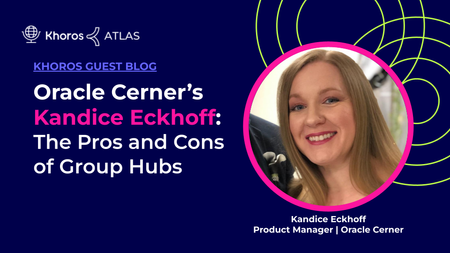
When Blake asked me to write about how our community manages our groups, I was not sure what to write about. We have had groups for so long at Oracle Cerner that we assumed everyone else does too. My name is Kandice Eckhoff, and I am the Product Manager for our Khoros platform, Oracle Cerner. I have been with the company for almost 12 years in various roles and in my current position for six of those years. uCern is Oracle Cerner's collaboration platform used for client-to-client and client-to-associate collaboration on our products and services, ideation, and assists with ticket deflection by providing answers to client questions. uCern was started in 2009 on the Jive platform, and at that time, we let anyone create a group. This was not a good idea. I would NEVER recommend this for a community. We ended up with groups like "Cat Lovers," "<Insert College Name> Alumni, "New Moms," and the like. While the intention at first was good, just getting people using the community, it quickly got out of control. We eventually locked down group creation. New groups are evaluated by our team and created based on business needs. By then though most of the damage was done, and our clients were complaining about search results pulling in random information or stale content. Group owners would leave the company or change roles, and groups were no longer active or responsibly managed, so we ended up with a lot of those. In 2018 we separated associate-only collaboration to help with some of the confusion. During this time, we archived groups, spaces, projects, etc. with no created content or activity within the prior year. Subsequently, when we started planning our migration to Khoros, we again started an archiving exercise to minimize the amount of data we would bring over. We were able to purge 55% of our groups because of this effort. When we migrated, we brought over 2,254 groups. That number has since grown as we have weekly requests for new ones. The need for them varies: private collaboration for specific clients and associates, aligning groups with our products, and associates realizing the need for collaboration on certain topics or markets we are in. As you can imagine managing this number is difficult. Permissions are a nightmare, community engagement is difficult to monitor accurately, and the removal of the "old stuff" surfaced older stuff clients have found inaccurate. In turn, the cycle of constantly curating our content continues. We are repeatedly told no other Khoros client uses groups the same way we do, hence being the group hub unicorn. So how do we manage this many groups? It is not easy. We are currently looking at archiving more inactive groups and realigning our community structure based on feedback we have received. Ideally, we will end up with 1:1 product groups and a couple hundred non-specific groups that remain for topics, regions, or are role specific. For those of you that do use group hubs and now have access to manage the group role permissions at the global level…you're welcome. 🙂 That was done at our request due to the number of groups we have and the time it took to update any changes since we had to do them manually. Thankfully, we have a team that can automate processes, and we were able to minimize the time spent making manual updates while Khoros built the functionality we needed. Here is my advice to any community managers planning to implement group hubs: Have a plan - I know it seems like an easy decision, but you need a plan for who will handle creating the groups. Once they are created, who will monitor or curate the content? How do the groups fit into your community structure? Will you have groups at the global level, within categories, or a combination of the two? Plan for quarterly, semi-annual, or at the very least annual archiving of inactive groups. If you are the community manager, the responsibility to monitor the ENTIRE community should not fall on you. If someone requests a group, they need to own all the group responsibilities. That includes answering questions, finding the answer if they do not know it, posting at least weekly to keep the group active, and making sure group ownership is updated as needed. Have a group dedicated to just group owners so you can communicate with them. Take a look at the resources below to learn more about Group Hubs in Khoros Communities Group Hubs Overview and Use Cases About Group Hubs Group Hubs Onboarding Videos Group Hubs Best Practices11KViewsSign in to react to this post6CommentsAn Interview for Change: How AI and Automation Drive ROI
Digital customer care can meet and exceed your original ROI projects in several ways. However, poorly implementing a digital Care system can cost hundreds of thousands of dollars annually in wasted time and low NPS scores. Khoros has been a social care leader for years, but a tool is only as valuable as the one who wields it. To get to the bottom of the best ways to use and prove the ROI of Khoros Care, we sat down with Khoros product marketing expert Josh Snider to get an expert opinion on the best and worst ways to use Khoros Care. Parker Hicks What's your background in Product Marketing? And why did you decide to come to Khoros? Josh Snider My background is actually in product marketing, but before that, I was in public relations, and before that, I was in embassy educational policy. I was excited to come to Khoros because I was already working as a player in the space and having a lot of fun creating chatbots and conversational commerce. Khoros offered me to work on use-case solutions, and it was something that just fell into place for me. What has been your experience with the Care platform? My experience has been, most recently, using [the care platform] to create real-world mock-ups for chatbots to send to customers and say, "you guys should get a bot." This is what it would look like within Google's business messages (GBM). In turn, I would build the GBM instance and assign the bot to it. I would pull it up on my phone and simulate myself as the agent within Care, chatting with myself on the phone and recording the whole thing as though I was interacting with a customer bot, so we could help them visualize what it is. The agent UI is excellent. An example would be the proactive web chat we built. It has the ability to create and manage 10 or 15 different chat widgets. Depending on your website and what kind of knowledge base your site knows, you assign different widgets to it. Can you share some of the best and worst use cases you've heard of? Sure. This one's pretty straightforward. A number of companies will want to put a bot on public social media channels. My question has always been, why do you want to do that customer? Their answer is something along the lines of, "Because the brand is getting buried in volume." Sadly, a lot of that volume is bull. A lot of the volume is really easy questions. Obviously, it's the sort of stuff that a bot could handle. However, every time a major technology company has launched a bot on a public social channel, it has immediately melted down or been proven to be useless days upon doing it. I like to ask companies what makes you think you will be able to outperform the big name brands that have tried before. What's the worst way you could use a bot on social media? You don't want to let it train itself, which takes away a lot of your opportunity for very intelligent bots. The amount of effort you'd have to put in through supervised training and optimization of the bots would be an immense effort. You're putting yourself at very high risk for a public high-volume display of your company's customer experience or service excellence. You could spend a bunch of time and money, and you'll end up with a problematic bot, or you can spend a bunch of time and money, and it'll still be unimpressive in the general bot and AI field. The internet is very much “Lord of the Flies,” and as a corporation, you're going to struggle with having a public-facing bot in the divisive world of the internet. You're screaming to the Twitter and Facebooks of the world, look at me, I'm a smart bot, I can help with basic things like x, y, and z, but in reality, you're not. Best case scenario, you're going to get embarrassed, and at worst, it could seriously harm your brand. What's a best use case or real best practice? The real best practice is when the only thing the bot does is a basic routing feature based on sentiment detection. For example, if an at mention sounds high risk or dangerous, the bot can spit out, "please don't tweet us, call 911; otherwise, visit the support portal here for anything else." When a bot gets an at mentioned under certain conditions, the bot should be spitting out a general welcome message and the same welcome message every time. For example, "thanks for contacting this company's customer support. Hit the button if you want to DM a support agent." Boom, you can hit the button. With a good DMS (direct messaging service), you can do all the various bot actions you want. However, you have to be cautious with how you choose your routing options. In the past, I've had companies come to me with something like $500,000 and ask for the sexiest, most fantastic bot. In their mind, they think that everyone is going to love us for it. Next thing they know, they'll solve customer service entirely, and we will go on vacation for half the year. Sadly, it never works that way. Until natural language programming can spit back out something worth anything, you will still need to use humans for more complex questions and be mindful of your bot use and customer routing. Let's say you have a customer that comes to you and says, "Hey, we're gonna get rid of all of our humans. We're only gonna use bots." How long until they return to you, say it didn't work and ask for advice? I've never seen anyone substantially large do that. Any business above a specific size knows that that's impossible to do entirely. Generally, a large company's customer engagement and care systems are convoluted. There will be five or six engagement teams on four plans. Times that companies attempt to go bot and A.I. only happen more often in the B2B sales and marketing teams. They will want to throw web chat on their site's enterprise sales and support sides, but nothing in the consumer business. I might need support to turn on the internet for 10 warehouses and 400 locations. They have chat and support messaging channels open, but the volumes are not there. It's because we're all working in an email on our phones and occasionally, in Slack, if they're a little more of a modern business. You're not going to get the same support chat volume that you would with a $70 a month residential customer. Your two businesses are more integrated. You've got people who know each other emailing each other back and forth. You're not coming in through the top of a support flow and having to get routed around. That department will like to look at web chat after a year or two and realize that they don't have any volume here. So they just turn it off. My recommendation to them is to never just turn it off. Just because you're not doing any volume on this entry point doesn't mean you should turn it off. It's better to figure out where people are having those conversations and if you want to hear them or not. What's the best real-world use case you've seen? The brand uses bots, text agents, and messaging channels in Google, Apple, and WhatsApp is an excellent example of using a bot effectively in Care. SMS is cool, too. When you can figure out how to keep it very simple because looking at a bunch of plain text is annoying after a while. When a bot sends you a text wall on a phone trying to solve a problem for you. It's still just as irritating. My personal favorite use case is automated scheduling. When you're trying to book a haircut appointment, for example. You can schedule your appointment through a bot that gives you a time picker that can immediately add an event to your calendar and reserve that time. It's so simple that if you ever have to go back and ask, wait when my appointment with the mortgage reviewer or home appraiser or whoever is? You can go to that conversation in your messaging center on iOS or Android and text that bot or escalate to a human if you have any questions or need support. It's pretty darn simple and impressive when it's done correctly. One of the most significant customer pain points that keep coming up is that customers are struggling with too many clicks to handle the conversation. What would be your advice on how to deal with that problem? Let me start with Khoros. Our modes of engagement are primitive but not in an unsophisticated way. You'll have to consider how you engage one-to-one customers or one-to-many at a high level. Take time to review a lot of different chats. From there, see how they are built, and you add on a bunch of power or action items. You definitely add complexity that can make it harder for an agent, right? If you want to add routing and tagging, okay, those are additional clicks. An agent needs to say, "It looks like they're a service person. I'll click tag as service route to service." Those processes don't necessarily need to exist. Companies like ours can solve them with elegant UI, enough automation, and AI. We've been advancing that science. To the customers saying this, just know that we hear you, and we're on the same team here. For what customers need to do, you have to have AI and AI-powered automation specifically. If agents have too many clicks, it's likely because there are things that they have to decide or do that a bot or a rule or some other system could easily do for them. A simple solution would be to let bots tag routing and prioritize whatever time or click-heavy tasks you're agents have to do. Take clicks off the agent's plate. Now sometimes, doing this can be expensive or complicated. You have to remember that's the nature of the beast. For a real-world example, I think there was a telco company with 100 Facebook Messenger agents. They saved roughly a million dollars through intelligent automation and routing. I think it was a 13% efficiency improvement, on average, after like two months of it. And over the course of a year, it was something close to $980,000 in labor savings just by using our Push Next automation system. I think it's important to ask yourself if it's worth 100k to save that million. At the end of the day, the Khoros Care platform is immensely powerful and can provide well over 100% ROI. However, as Josh Snider put it you’ll have to know how to use the platform and how to use automation to best suit your business needs and in turn, find record-breaking success in customer care. For additional resources on the Khoros Care Platform, please visit these resources below! Khoros Care Training Videos Connect with Khoros Expert Product Coaches Creating Highly Efficient Teams with Push Next3.6KViewsSign in to react to this post1CommentCommunity ROI: Embracing Humanity’s Desire to Help
In today’s digital ecosystem, it’s a requirement to have a community page. No matter what industry you find your brand or company in, having a place for your customers to talk about your business, find support, or ask questions is necessary. Long before Khoros was Khoros, the founders deeply understood the importance of digital communities. It’s easy to hark about how much value you can pull from having an award-winning community. However, few articles and resources are diving deep into exactly why brands are finding these high levels of value and success with their digital communities. This article aims to change that. Of course, it would be a misstep not to recognize some essential realities of running a digital community. The initial bottom line is that running a community costs money. There is no escaping or not paying the hosting, designing, security, and general staffing costs. It could cost anywhere from the low tens of thousands to millions of dollars a year. As the intrepid new community, you might find yourself needing to garner more executive support. You have to consider not only why people use community pages but also how you will find value in all aspects of the customer experience by having a highly successful community. Care and Community Utilizes Human Desire to Help one Another Khoros and several of our customers have proven that customers in need of support rarely care where they receive that support. In regard to digital communities, one of the most engaging types of posts is a support question. Even Google’s algorithm will point customers toward a digital community to answer product or service-related questions. This system is adventitious for whichever brand or company owns the community page, but why would any customer spend their valuable time and resources answering strangers' questions on an online forum? For some community managers, this question isn’t of massive importance. It’s extra work and research to understand why customers answer strangers’ questions in digital communities. However, if your community page starts slipping towards inactivity, you find yourself struggling to understand why your page isn’t being used as much anymore. People tend to help one another for various reasons, but it generally breaks down to our evolutionary hardwiring. This will defer slightly from intrinsic and extrinsic motivations, but the rewards are generally the same. One of the most significant motivating factors is that humans are generally socially ousted for being a “freeloader” or “lurker” in communities or social settings. In Sebastian Junger’s sociology exploration book Tribe., this isn't a new concept. He explores how helping your fellow human was quite literally law in most of ancient society, saying - “This [helping in social setting] is clearly an ancient and adaptive behavior that tends to keep groups together and equitably cared for. In his survey of ancestral-type societies, Boehm [Anthropologist Christopher Boehm] found that - in addition to murder and theft - one of the most commonly punished infractions was “failure to share.” Freeloading on the hard work of others and bullying were also high up on the list.” This concept is the gateway to explaining why humans and, by extension, your customers are beyond willing to help one another. In a digital community, customers are rewarded with likes, shares, and comments when they go out of their way to help their fellow customers. On the flip side, several online communities will punish “lurkers” or people who contribute nothing to the community by deactivating their accounts, ending specific permissions or abilities, or even straight bans for inactivity. Now, as a cunning community manager, you could greatly reward certain users for being the most active or providing the most support in the community. This was best seen at Khoros through the Powerschool community. Powerschool needed to implement several new processes and chatbots in the support side of their community. The most effective way for Powerschool to test and implement their new community processes was to invite the Community super-users or ‘mentors’ to test alongside their development team and make suggestions in real-time. Using Boehm’s theory of ancient humans punishing one another for non-sharing, your community could promote an event to invite the most active user’s to a new digital event or beta test. Powerschool showed that you would most likely see a surge of sign-ups and community engagement by rewarding the users who engage the most with your audience. By the Numbers A healthy, well-used community is almost certainly good for business. In qualitative terms, your new fancy community will improve your NPS scores; your general customer sentiment will improve, and if you do everything right, you might receive some free marketing across the social media ecosystem. In terms of quantitative results, let's look at a care instance. A care instance in the North American region receives, on average, 100 contacts a day. This care team just linked the brand’s community page to their self-service suite. Because the community users and community articles simply solve at least 40% of the care team’s daily questions, your care team’s volume will be greatly reduced, plain and simple. The bottom line is that by simply using a Khoros-crafted community, you should be able to link both your community and care teams together in one unified system to improve almost all aspects of your customer’s experience. For more resources and to expand your knowledge, please visit the links below! Taking Dr. Micheal Wu’s Gamification Theory into the Real World [Podcast] Gamification in the Wild: Giving back to build Brand Loyalty [Podcast] Lurkers vs. Learners: Renaming Community Members Who Listen The Hybrid Future is Here: Let’s modernize your agent's experience SANE Australia case study | Khoros3.4KViewsSign in to react to this post0Comments