Google+ vs. Facebook vs. ... Part 1: The Strength of Bidirectional Connections
Michael Wu, Ph.D. is Lithium's Principal Scientist of Analytics, digging into the complex dynamics of social interaction and group behavior in online communities and social networks. Michael was voted a 2010 Influential Leader by CRM Magazine for his work on predictive social analytics and its application to Social CRM.He's a regular blogger on the Lithosphere's Building Community blog and previously wrote in the Analytic Science blog. You can follow him on Twitter or Google+. Since its launch in late June, Google+ has been a hot topic of conversation. So before I proceed with either the engagement or the gamification series, I think it is appropriate to take a short detour to discuss Google+. I think by now everyone has most likely had the chance to play with Google+ (or at least know what it is). If you still don’t know, don’t miss the boat. There are already 25+ million people signed up. I am not going to repeat Google’s pitch, so take a look at the demo from Google. What I’m going to talk about today, are some of the network properties and social principles behind some popular social platforms. Of course, I will compare and contrast them to the new kids on the block (i.e. Google+), and talk about their behavioral implications. Facebook Facebook certainly brings great utility to its users by helping them maintain the relationships in their lives. However, people’s relationships in the real world are very complex. Not every relationship is the same, and every friend is unique in some way (see Social Network Analysis 101). By collapsing all the different relationships into one bucket, called friends, Facebook created the problem of conflicting social spheres. Some groups just don’t mix in real life, and some information is not intended for all friends, not even among close friends. Humans deal with this problem by spatial-temporal segregation. We simply meet different groups of people at different time and different places. But on Facebook, we are stuck; we either don’t share, or share to all our friends. Although Facebook has subsequently implemented features that allow their users to put their friends into groups, these features are band-aid fixes that didn’t drive much adoption and are therefore ineffective. This is precisely the problem that Google+ is trying to address with Circles. I am certain that social researcher like Paul Adams, an ex-Googler now at Facebook, has infused much social insight and contributed to the present success of Google+. Unfortunately, he is not allowed to comment on the Google+ project due to his non-disclosure agreement. Before I say more about Google+, let me point out some interesting and distinctive network properties of Facebook. Bidirectionality: A Double Edged Sword Friendships on Facebook are bidirectional. That means both parties need to consent in order connect. Anyone can initiate the connection, but the other person must accept it to create a tie. This type of bidirectional, mutual, and reciprocating relationship is very important, because it keeps the relationship and information content more relevant. As a result, the signal-to-noise ratio on Facebook is fairly high compared to other networks that only require unidirectional consent, such as Twitter. The same can be said about Linkedin. Because Linkedin requires bidirectional consent to connect, the information content on Linkedin tend to be more relevant compare to Twitter. However, bidirectional consent is not without a cost. One of the drawbacks is that it requires the coordination and alignment of intent between two people. This is harder to achieve than it seems, and it limits the growth rate of the network. Why? Because it takes more time for people to build their network. You can easily spend the weekend and follow 1,000 people on Twitter, but it’s much harder to get 1,000 friends on Facebook. Even if you can, it’s going to take you much longer to build a network of same size on Facebook due to its bidirectional consent. Ironically, this offered Facebook a strong upper hand against Google+. The simple explanation (the psychological perspective) is that, because it takes more time and effort for people to build their network on Facebook, they are less likely to forfeit all their investment and start over again. This creates a psychological barrier preventing Facebook members from switching. Although Google+ may gain more new members, people will tend to cling on to their Facebook network, purely because of the amount of time they already invested in it. A more rigorous explanation involves the network effect. Although Facebook is still 30 times bigger than Google+ now, its true strength is not the sheer volume of its user base, but the cohesiveness of the networks. Facebook contains many strong ties: families, close friends, high school buddies, etc. Having a lot of these strong connections is what made Facebook extremely sticky. Strictly from a network value perspective, the more strongly interconnected a person is on Facebook, the more utility they can derive from the network (i.e. network effect). Conversely, there is more they have to lose by switching to Google+, where these connections may not be present on the new network. Therefore, users who have many friends and can bring many friends to the Google+ are precisely those that are hardest for to get, because they are least likely to switch. Users who have little or no friends are the easiest to switch, yet they are least effective for driving mass adoption of the new network. Conclusion Although Google+ has a phenomenal growth rate, the strength of bidirectional connectivity on Facebook shouldn’t be overlooked. Despite the fact that bidirectionally-connected networks have a slower growth potential, Facebook offers: More relevant relationship: stronger ties that makes the network very cohesive and sticky More relevant content: higher signal-to-noise ratio (SNR) Since the past couple of posts I wrote had fairly low traction and almost no kudos, I’m going to do something different in the next couple of weeks to see if things change. I will split the longer articles into short ones and post them more frequently. So later this week, let’s see what we can learn from other networks. By the way, I am in Philadelphia now. I’ve been invited to participate in a Wharton Gamification Symposium at the Mack Center for Technological Innovation. This symposium starts today and it’s organized by Wharton Prof. Kevin Werbach and NY Law School Prof. Dan Hunter. They managed to gather a very distinguished crowd of thought leaders, academic researchers, scientists, practitioners, entrepreneurs, investors, as well as policy makers. I’m very honored to be invited. Since there are so many experts at this symposium, I believe it will be an interesting learning experience for everyone. So I will have much to share after I return. In the mean time, we can talk about Facebook and Google+. Follow me on G+. 24KViewsSign in to react to this post
 8Comments
- 340ViewsSign in to react to this post0Comments
- 319ViewsSign in to react to this post0Comments
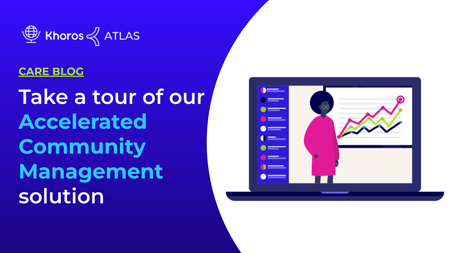
Take a tour of our Accelerated Community Management solution
One of the most effective channels for self service is a brand-owned online community. Communities are engines for matching people with needs to people with resources; questions with answers, experts with novices, and emotional needs with those who have the capacity to give However, managing a community is equal parts art and science. Messy peer-to-peer interactions cannot be fully automated by algorithms and human managers cannot handle a large volume by themselves. Without operational tools to accelerate moderation and management tasks, a community cannot grow efficiently. With Khoros Accelerated Community Management, our customers can say goodbye to manual routing and switching between their Community and Care instance to manage responses. And with community response analytics built into our Care product, our customers can confidently manage cross-channel conversations, agent capacity, and response times. Take an interactive product tour of our Accelerated Community Management solution to see how our comprehensive moderation and management tools provide faster and more flexible customer support operations. Check out these resources to learn more about Accelerated Community Management Community Self-Service + Accelerated Community Management The Hybrid Future is Here: Let’s modernize your agent's experience Getting started with Community Moderation in Manage View3.1KViewsSign in to react to this post0CommentsCreating Highly Efficient Teams with Push-Next
Ready to see what a highly efficient Care team can accomplish? You already spend a lot of time configuring the appropriate priorities and routing rules to have conversations filtered and sorted. It’s a part of your job to optimize your agent's queues to meet SLAs for responding to and resolving customer issues. Why not automate some of that process? By enabling this push-next queue configuration option, you can better control the conversations that are available to agents and ensure that all users receive a response in a timely manner. Push-next is a powerful tool to prioritize inbound items and help create a steady pace for your agents. Using this queue option hides the “available queue” and prevents agents from reviewing conversations before claiming them, ensuring that conversations are responded to in the prioritized order you have set up. As part of the team-level settings, you can define for routing for each of your customer care teams, improving your customer's experience and conversation resolution time by turning a manual process into simple automation. Check out this short video to quickly understand the different types of queues. Khoros Customer Success Story Instant gratification dominates digital engagement, and customer support teams are on the front line. The job can be daunting, and in some instances, agents can cherry-pick issues from the available queue that look easy or that they have answered before in order to improve their TAR numbers. This can hinder the agent's performance growth, burn out other agents handling all the difficult conversations, and make your customers wait even longer. It’s up to managers to equip agents with the right tools to take care of customers— including a conversation management strategy to represent the brand as well as they can. Efficiency is the name of the game in the digital contact center. The more efficient you are, your agents, customers, and leadership will be happier. For example, a current Khoros Customer wanted to reduce the number of agent clicks throughout the day by automating their workflow. They took an eight-week snapshot of their care team’s performance metrics at the end of the year. Then, after onboarding a Push-Next configuration, they compared another eight weeks to the previous measurement. They saw a 13% increase in agent efficiency throughout the weeks. This allowed agents to keep up with an influx of messages, peaking at 25.53 cases per second. You could save an average of 25 clicks a day per agent using push-next. Proving immediate gains in productivity and efficiency. The question you might ask yourself now is, “how do we know if this queue configuration will work for us?” The first thing to understand is that Push-Next should help cut down/eliminate the "inactive time" accrued by agents. Inactive time accrues when there's work available in Assigned to Me, or Available, but the agent chooses not to take the following conversation, whether it’s because they're not ready or they're talking to a colleague. In the case of customer experience, success starts when you understand your team’s performance baseline. A powerful tool in your arsenal is the Agent Performance widget which can give you a complete view of Agent or Team performance. We recommend including the following metrics: Utilization shows what percentage of the agent’s work time is true "helping customers" time. Response and Average Response Handle Time shows the total number of responses sent by an agent and how much time an agent spent viewing a conversation before a response has been sent (response handle time). In-focus and Out-of-focus Active & Inactive Time In-focus time is an agent's time looking at the Khoros tab. Out-of-focus time is the amount of time an agent spends looking at another tab that is not Khoros. Inactive time is the amount of time an agent spent with no conversation in view in the agent tab when there were conversations available for them to take action on (i.e., not working when they're supposed to) Active time is the time an agent spent viewing a conversation in the agent tab. Team Performance To track volumes of responses vs. closed, as well as handle time. Can be used to quickly compare and identify underperforming agents. Together, these metrics provide a holistic view to see average performance and identify over or underperforming agents. For example, If you see an agent who’s accruing unusual amounts of Responses Assisted, this could indicate that they are “cherry picking” by deciding not to respond to the more difficult conversations they are assigned. Not sure if Push-Next is suitable for your team? Here are a few questions you should consider about implementing Push-Next How much do you want to depend on your agents to decide what is important? When configured optimally, your agents should predominantly be routed to conversations that need to be responded to. How much do your agents decide on how to structure their workday You can calculate Utilization very robustly using Agent Activities and Agent States metrics. Would you and your agents like to try a pilot program for a Push-Next configuration? The pilot program setup process is simple to begin, complete, and compare. Customers will not be negatively affected during this trial. You should see immediate gains in productivity and efficiency. Talk to your CSM about a Push-Next Configuration today! Customers should review their Agent States when implementing Push Next. They may need to add more states to accommodate Push-Next or tweak which states should allow agent actions. A key training point: Once Push Next is enabled, agents will either need to Close a conversation, or Click the X button in the top-right corner of the conversation view to "Clear" it (typically after sending a response to move the conversation to Pending), and then the next conversation will be pushed. Prior to Push-Next, the “Clear” functionality was more of a workflow option. To learn more about Push-Next and other queue configurations, check out these resources below Join an Agent Activity Product Coaching Session Use tags to populate agent queues Tag Routing for Work Queues examples Set up team-specific settings for agent queues Using Claim Next and Push Next queue configurations2.1KViewsSign in to react to this post0CommentsThe Hybrid Future is Here: Let’s modernize your agent's experience
While chat-bots, self-service, and community answers are key tools in your customer care playbook, the collective experiences of your agent team aren’t something to overlook. On the surface, improved agent experience may include one or two things listed above. However, pairing some out-of-the-box thinking and the wide range of capabilities found within Khoros can make the difference in your digital contact center. In the past, it was commonplace to have your care center on the second floor of your main office building. In those days, it was easy to get your finger on the pulse of your agents’ experiences and performance. All that was required was to walk into your call center and ask your managers. Today, your agent’s office has turned into bedrooms, kitchen tables, different floors of your headquarters, and for the larger brands out there, different nations. Working Remotely has changed everything and we as brands have to change with it. This isn’t to say that WFH is detrimental to customer satisfaction or agent performance. The rise of WFH environments has been a broadly positive shift in the workforce according to a study done in the Department of Psychiatry at Tokyo Medical University. To quote the study directly, “The multivariate logistic regression analysis demonstrated that remote work was associated with the reduction of psychological and physical stress responses independently of changes of job stressors, social support, sleep disturbance, and total sleep time on workdays.” While this is a key indicator of a more positive experience for those who work remotely, it has presented an interesting challenge for brands. With our teams now spread out across the country or the globe, we need to understand how our teams are performing and what we can do to improve their in-app experience. While your specific KPIs may differ widely depending on your brand, your agent experience should always be included in your list. The simple truth is that happy agents make for satisfied customers, which in turn, creates an overall more positive customer experience. Regardless of your team’s size, a primary factor in improving your customer’s experience is understanding not only how your agents are performing but also ensuring that they have the right tools to serve their customers in the best way possible for your brand and customer care goals. Like any tool, Khoros’ Care Platform can best serve your brand when it is implemented to its full potential. Let’s take a look at the seemingly unconventional methods that Khoros can help your agents across the board. Analytics A foundational step to modernizing, the ability to recognize and understand what your team needs to perform at peak levels is wholly dependent on your analytics. Without clear data, you may find yourself struggling to make meaningful changes or better design your care strategy. Alongside your monthly key reports, a best practice would be to run an Agent performance report. What exactly this means for your customer care team will, of course, differ on your KPIs, care strategy, and chosen industry. However, you should consider the following metrics and how they fit into your care system. Average Response Handle Time Total Inactive Time In-Focus Inactive Time Out-of-Focus Inactive Time For more information about how to fit these concepts into your care strategy, take a look at this step-by-step series exploring Modernizing Digital through Care Analysis, Optimization and Growth. Automation Improving both Customer and Agent experience is simplest with the addition of Automation. Skip headaches on both parties by providing customers with an easy way to get answers prior to routing to your agents. For agents, it can be integrated with your KB to provide instructions to internal-only information that can help customers resolve their issues. Our Agent Assist feature reduces the time to handle customer inquiries, deliver accurate resolutions, and even the time needed to train new agents. Powered by Natural Language Processing (NLP), Agent Assist delivers agents real-time recommendations for troubleshooting Guides and Community Knowledge articles. Combining Agent Assist, our current automation systems, Welcome Responses, and even the simple act of listing Business hours can equal up to a significantly improved CST/NPS. Community In the case that you have an active and flourishing Community, directing your customers' support requests to your Community is the best solution for both your agents and your customers. It’s a way to connect with your customers while providing practical ways to find their answers. Give your customers the accurate responses they want while opening up more opportunities for customer satisfaction, loyalty, and positive “voice of the customer” feedback. Best Practices Utilize your Community’s super users with self service and off-loading Q&A’s to decrease the workload for your Community managers and agents. Allow peer to peer responses and enable super users to provide answers. Meet your top KPIs by increasing engagement & resolution rates, improve your CSAT/NPS, reduce cost per contact, and improve agent performance(link to Atlas Agent Performance). Suggested Responses Time is money and the less time your agents spend getting your customers the answers they need improves your NPS for more than just your quarterly metrics. Suggested responses cut down on the repeated questions bottlenecking your agents' contact channels. Best Practices Provide agents with repeatable answers that they can easily access and provide to customers, easily cutting down their handle time and TAR. (TAR is a customer experience metric link to TAR in Atlas) Meet these following KPIs: % of SLAs, Deflection/Containment, AHT, TAR, Cost per contact & Agent performance. Resolution Rate Welcome Responses Welcome responses built into your initial contact system can provide a big relief to your agent to increase the amount of call deflection in one fell swoop. Best Practices Setting expectations on time to respond Ask preliminary questions and even refer to Self Serve Main KPIs: Improve TAR , CSAT/NPS, Handle time, % of SLA and initial incoming engagement. While at first this can seem like a complex puzzle of various systems, by putting all of this together you will rapidly see a happier, more efficient team emerge that are more equipped to meet your brand’s SLAs and improve your CX overall. As always, if you have questions or would like to chat live, shoot me a PM @A11ey. I would love to discuss your ideas on how you are modernizing your Digital Care! If you are interested in best practices for your Care or Community programs, check out the other blogs in the Modernizing Digital Care Series.3.1KViewsSign in to react to this post0CommentsCommunity Self-Service + Accelerated Community Management
Self-service goes beyond relieving your support team’s workload. It’s a way to connect with your customers while providing practical ways to find their answers. Give your customers the accurate responses they want while opening up more opportunities for customer satisfaction, loyalty, and positive “voice of the customer” feedback. Building brand awareness, increasing CSAT, and deflecting calls all sound great, but the thought of building or managing a community might sound strenuous. Many brands have legal concerns, fear overly negative responses, sometimes even bullying, or dread managing volumes. It is our mission to help alleviate those concerns, and turn them into opportunities with the Khoros Platform. Previously, I’ve touched on self-service options in previous blogs, specifically community & automation. Today I’ll be expanding on these topics, starting with the advantages a community provides and the benefits of Community Moderation in Manage View. Effective self-service is the key to success. No matter what industry you are in, self-service always should be a factor in your customer support plan. But the key to success here is doing it right. Too often do we see companies stop at a basic FAQ page to get important information out to their customers. Now don’t get me wrong, FAQs are great. But this only serves a select group of customers, which often leads to a call, chat, or search to answer their questions. Thanks to search engines like Google, people expect to find answers when they search. But if your site doesn't offer the correct answer, your customer could find their answer on a competitor's site. With a branded community, your customers can find answers anytime and have a place to interact with each other. Combine the power of Khoros Communities with Care to gain efficiencies. Once you have your community up and running, you may quickly identify that many of the questions will be the same ones that come from your other channels, including Social, Chat, and Voice. Khoros has a great Accelerated Community Management Solution that connects your community to your Care instance. This gives you powerful tools to manage community responses and moderation. If you already have a Khoros Care team answering similar questions for other channels, routing community responses could improve your response time. Routing through Care helps alleviate manual routing and switching between your community & Care instance to manage responses. Plus, Care provides analytics for your community responses, helping you better manage cross-channel conversations, agent capacity, and response times. Here is some advice to keep in mind on encouraging your community to be accessible and positive. Let your community content be a universal guide. In any community, it is paramount to provide both users and agents with clear self-service direction to find answers in the Knowledge Base (TKBs), Announcements, Discussions, or even Ideas. Official brand documentation such as FAQs or instructions should be easily found and identified in your community’s TKBs. It's best practice to ensure your agents provide customers with the same answers/instructions provided in your TKBs. A community public knowledge base provides quick and accurate resources for agents to distribute across active channels. Additionally, sending customer links to TKBs will inherently create your community SEO value when customers search for answers on Google. Accepted Solutions are a great way to encourage community members to provide answers. Healthy “peer2peer” collaboration reduces the demand for agent/community manager interaction. Be sure that Accepted Solutions have been verified for accuracy when needed. This practice varies by community type. Not all Accepted Solutions require verification by the brand but should remain actively reviewed. Here's the bottom line. Having a branded community doesn't only increase agent and content efficiency. It goes beyond static FAQ capabilities by allowing customer feedback and providing more opportunities to optimize and utilize resources. I mean, how often have you gone to an FAQ page only to find outdated, incomplete answers with no way to tell the company that you still need help? As always, if you have questions or would like to chat live, shoot me a PM @A11ey. I would love to discuss your ideas on how you are modernizing your Digital Care! If you are interested in best practices for your Care or Community programs, check out these other resources Modernize your Digital Care Series Product Overview: Accelerated community management Interactive Product tour: Accelerated Community Management2.4KViewsSign in to react to this post0CommentsSynchronous vs Asynchronous Conversation Priorities
Synchronous vs. Asynchronous conversation priorities In this blog, I am going to answer some questions we get from many of our customers. What is asynchronous vs. synchronous? How do I forecast staff for each type of channel? What does success look like for a best class customer service in each of these channels? Let’s start with the differences between asynchronous vs. synchronous. Synchronous Channels Synchronous channels are session or time-based, which means, as a customer, I start and end conversations in the same session; this is how traditional web chat works. Typically you find this when you are on a brand’s website, and the chat bubble opens in a separate box with some expectation setting of “your chat session beginning.” This requires customers to finish their conversation in a single discussion and expect an immediate response. Many consider this a more old-fashioned way of engaging with customers because it puts the chat owner, or brand, in control of when the conversation starts and ends. Other examples of Synchronous conversations are phone calls, in-person conversations, and video conferencing. Perspective for Staffing Customer Experience: If their session unexpectedly ends or times out due to external factors, it can leave them without resolving their issues. The customer then must rely on the agent to have made notes on the account or chat history (if available) to search for confirmation. Agent Experience: A conversation doesn’t close until it is complete, resulting in fewer conversations since they are waiting for the customer to respond or for the session to timeout to close the conversation. Brand Staffing Needs: You may need to hire more agents to handle Synchronous channels because they cannot handle more conversations at a time. Asynchronous Channels Asynchronous channels are continuous and can happen over time, which means, as a customer, I can start and end conversations at my convenience. This type of conversation is in your everyday life, text messaging, email, Facebook, Google Business Messages, WhatsApp, and other Messenger apps. “Messengers” are often called chats, which causes even more confusion for anyone trying to understand the difference between asynchronous and synchronous chats. Perspective for Staffing Customer Experience: Asynchronous channels put the customer in control of “when” they want to engage with or respond to your brand. They don’t always expect an immediate answer if they ask a question, depending on their urgency. It's the intrinsic nature of the technology and how our brains have been trained based on personal experience. I mean, how often do you expect your friend to respond immediately if your question is not urgent? “What up, girl?” vs. “OMG, you won’t believe this!” Agent Experience: This often allows agents to start and end multiple conversations simultaneously or even answered by other agents. In this scenario, where the customer response time informs their urgency or situation, the Agent can multitask on other conversations. (You can multitask on Synchronous channels, it's just not as easy). Brand Staffing Needs: Your agents can handle more asynchronous conversations simultaneously, leading to a much more efficient staffing model and easy-to-measure results. In addition, it also focuses more on a customer-first experience, in turn increasing CSAT. Now then, how to be successful in either conversation type Always remember that a technology change may require reevaluation of your processes. Here are some scenarios to consider and how they can impact your handling of conversations in terms of Customer Experience: When chatting with a customer in a Synchronous channel, it is almost customary to ask, “is there anything else I can assist with?” But for the agent to move on to the next chat, the customer must respond with a yes or no, close the video chat, or let it time out, leaving the agent with limited options. If the customer responds with “no,” the agent can close out the conversation. It is a low percentage rate that the customer will respond, and there is no way to close that conversation. If they respond with a yes, the agent continues the chat and resolves the next question, then asks again, “Is there anything else I can assist with?” Rinse and repeat, becoming an ongoing conversation with no anticipated time to end until all customer’s questions are answered. Once the conversation is ready to close out, let’s say the customer asked four questions, and the agent resolved three. What is your close disposition? Resolved? Not Resolved? Won’t respond? (a very synchronous conversation in an Asynchronous chat) In an Asynchronous chat, there is no chat window to close and end the session. Now, after asking, “is there anything else I can assist with” agents can move to a new conversation, leaving the customer with the ability to respond at another time. Now, an Asynchronous chat in the same scenario, giving the agent more flexibility to help your customers. The agent's final response instead can be a statement, for example. “If there is anything else we can help with, just let us know!” Or even just close it out with a positive end statement like, “Happy we were able to assist! Have a great day!” Now you can close the conversation as Resolved. If the customer responds now, it's a new conversation. The chat may come back to the same agent or a different one. And if it happens to be the same question, the agent can see the history and use that to assist. (if you are tracking bounce, you can even add a tag here to track it) Routing prioritization for any channels should still be based on conversation type and urgency of need, whether it is Asynchronous or Synchronous. For example, if it is the “I need help now!” type of conversation, this is usually an indication that the customer will be frustrated, while “where do I find the FAQs?” is more of an I just need some direction. Of course, there are always the “I love your brand” posts, which we want to see more. So consider the Customer and the brand in each of these scenarios. Quick use case comparison Take into consideration the types of conversation for each of these. You may have a straightforward question like “where do I find the FAQ”, which could be answered by a simple link, one and done. The convo can take the same amount of time, whether in an Asynchronous or Synchronous channel. A more personalized question, like “why is my bill wrong,” the time to resolve may be the same for the Agent regardless of it being Synchronous or Async. The difference is how long it takes the customer to respond. In a Synchronous channel, the agent is waiting on the customer to respond before the session timeout hopefully. Whereas with asynchronous, the agent doesn’t need to wait. They can move on to the next conversation. When the customer responds, the Agent can pick up where they left off. Ultimately your Brand’s success should be defined by the goals you set and your customer’s expectations. There is no set number on how quickly you should respond, and you cannot base your response times on what other brands are doing. If you are doing things the same as your competitor, you may just be setting yourself up for failure. The best way to think about this is how quickly your customer expects you to respond to specific questions/posts. For example: If you are meeting your SLA’s at 98% with a one-hour average response time, you are already meeting a great goal. Now consider your sentiment and CSAT. Are there specific types of conversations that you could be responding to faster? A question about billing may require a fifteen-minute target in SLA. Then 1 hour SLA for an FAQ question; or even better, use a bot, so the agent never has to respond. Having a 15 minute or less response time on a high-priority conversation will improve your customer experience and raise CSAT. This is how brands start to target negative situations and turn them into positive ones. A customer is less likely to be frustrated if your brand responds within fifteen minutes, improving the Customer Experience and the Agent Experience. If you set customer expectations on wait times with bots or Welcome messages, the customer waiting on the FAQ answer probably doesn't mind the wait nearly as much. ⇒ Did You Know: The Khoros Platform supports both Synchronous and Asynchronous conversations. If you have questions or ideas, please feel free to PM me A11ey, or comment below! I know technology and customer experience are continuously evolving, so I encourage you to share your experiences with our other Khoros customers Don’t miss my upcoming webinar, Sync vs Async: How customers choose their experience, with @MatthewHe. We will deep dive into Khoros Care to discuss different customer and agent experiences with asynchronous and synchronous conversation, as well as how to use automation to set customer expectations. If you are looking for more on Best Practices in all Khoros Care channels, check out the Modernizing Digital Care Series. I discuss in-depth best practices for response times, staffing, optimization, and managing change.3.1KViewsSign in to react to this post0CommentsAtlas Series: Modernizing Digital Care
Ready to modernize your digital care program? Allison Fasching, Customer Solutions Director shares experiences and best practices in the Digital Care space. Discover ways to build a new program, optimize your existing program or prepare to grow, while ensuring your teams and tools are focusing on “Customer First” engagement! What’s this all about? Some of the topics we will cover are, Getting Started with your new Care program, Forecasting, Analysis, Optimization, and Growth. We’ll also talk about Change Management, and why you should be prioritizing this throughout your program journey. So, ready to get started? Dive in and enjoy! Don’t forget to drop any questions you have into the comments for our experts to answer. At the bottom of each blog is a link to the next and previous article to help you glide through the series. Part 1) Getting Started or Expanding In this video/blog, we cover a few questions we often get from our customers and prospects about getting started or expanding your Digital Care program. Part 2) Forecasting & Staffing In this session, we will cover a few questions we often get from our customers and prospects about ways to help manage change, forecast staff, and cover multiple channels. Part 3.1) Analyze, Optimize & Grow Knowing how to analyze, optimize, and grow Care programs will be the key to your success. Given the complexity, I have created a 3 part blog to cover each of these topics. In this first section, we will discuss the analysis you should be doing on an ongoing basis. Part 3.2) Analyze, Optimize & Grow If you did your homework from the Analysis blog, then you likely have a ton of answers, and probably even more questions! In this session we will talk about the Optimization of your Care programs, this is something that can benefit you no matter the maturity of your Care programs. Part 3.3) Analyze, Optimize & Grow Now that your team is a well-oiled machine, it's time to grow your Care program. In this session, we will talk about things to consider when growing your Care programs, if you haven’t already please be sure to read and consider the steps in Analyze and Optimize. Part 4) Change Management In this blog, we will talk about some Change Management best practices that can be applied to both expected and unexpected changes. Questions? Comments? Thoughts? If you have any questions on the tips provided, please comment below and I’ll get back to you! If you enjoyed this and want to further explore the subject, please download our eBook, Modernizing your contact center.2.5KViewsSign in to react to this post0Comments