Intrinsic vs. Extrinsic Rewards (and Their Differences from Motivations)
Before I delve into today’s topic, let me share an exciting announcement. Last week Lithium launched the first feature of our Premium Gamification products. The Badging feature is just the first of many more that we plan to add to our already robust gamification engine. I’m excited to see more of my gamification theory and work being productized in the near future! Don’t’ forget to let me know your comments on the new badging features. Looking for practical examples? Watch this session with Domo, Videotron, and SAS from our Engage Conference in September 2019. OK back to lifting the fog! Last time I discussed motivation and the difference between intrinsic and extrinsic motivations. Now we can go one step further to talk about rewards and the difference between intrinsic and extrinsic rewards. Although motivation and rewards are both very critical to the design and implementation of gamification strategies, few gamification practitioners can articulate the subtle differences between intrinsic motivations vs. intrinsic rewards. Some even treat these distinctive concepts synonymously, which is ridiculously wrong. Since this post builds on the concepts introduced in my last post, if you haven’t read it yet, please take a few minutes to do so. It is critical to understand the fundamental concepts around motivation before jumping into today’s discussion. Review it here: Intrinsic vs. Extrinsic Motivation. Rewards vs. Motivation As you may recall, motivation is the reason that drives someone to do something (i.e. a behavior or an activity). Reward is a completely different animal. It is what you get for doing something rather than the reason for doing it in the first place. A simplistic way to look at the difference between motivation and reward is that motivations generally come before the behavior, but rewards come after the behavior. So what is the distinction between intrinsic and extrinsic rewards? Intrinsic vs. Extrinsic Rewards An intrinsic reward is an intangible award of recognition, a sense of achievement, or a conscious satisfaction. For example, it is the knowledge that you did something right, or you helped someone and made their day better. Because intrinsic rewards are intangible, they usually arise from within the person who is doing the activity or behavior. So “intrinsic” in this case means the reward is intrinsic to the person doing the activity or behavior. An extrinsic reward is an award that is tangible or physically given to you for accomplishing something. It is a tangible recognition of ones endeavor. For example, it’s a certificate of accomplishment, a trophy or medal for winning the race, a badge or points for doing something right, or even a monetary reward for doing your job. Because extrinsic rewards are tangible, they are usually given to the person doing the activity; as such, they are typically not from within the person. Therefore, extrinsic rewards means the reward is extrinsic to the performer of the activity or behavior. Here is an important distinction that I like to emphasize. When talking about rewards, intrinsic rewards are those that originate from within the person, and extrinsic rewards are those that originate from something beyond the person. However—as you might recall the previous post—when talking about motivation, intrinsic and extrinsic has nothing to do with whether the motivation originates from within the person or outside the person. Instead, it means whether the motivation is intrinsic to the activity or not. Why People are Confused about Reward vs Motivation Here is the tricky part, so stay with me. Some people may be driven by rewards. So rewards can sometimes be the reason that drives people to do things. Thus the rewards we get, can sometimes be the motivation. However, people do thing for many reasons beyond the rewards, so there are many motivations that are not rewards. Since rewards can sometimes be a motivation, is it an intrinsic motivation or extrinsic? This is an important question and one that has confused many in the gamification industry. You see, I said it was tricky! It’s not difficult to see that doing something for the rewards is just the opposite—at least in spirit—of doing something simply for the love of doing it (i.e. intrinsic motivation). So when an activity or behavior is motivated by rewards, it is always extrinsically motivated. In other words, when rewards become the reason that drives someone to do some activity or behavior, they won’t be doing it purely for its own sake anymore. Therefore all rewards—both intrinsic rewards and extrinsic rewards—are by definition extrinsic motivations (i.e. extrinsic to the activity or behavior). Conclusion Just because we happen to use the same set of words (i.e. “intrinsic” and “extrinsic”) to describe two different concepts (i.e. rewards and motivation), it doesn’t mean those words mean the same thing. This is an unfortunate consequence of the fact that human language is simply not precise enough compared to mathematics and computer science. This is compounded by the fact that academic research tends to be very narrowly focused, and disparate disciplines often do not have enough communication with each other. When speaking about motivation, the terms “intrinsic” or “extrinsic” means intrinsic/extrinsic with respect to the behavior—whether or not the reason for doing something is simply the love of doing that very thing. But when speaking about rewards, these same terms mean intrinsic/extrinsic with respect to the person—whether or not the reward originates from within the person doing the activity. Next time you talk to a person or company claiming to be experts in gamification, ask them about the difference between intrinsic/extrinsic rewards vs. intrinsic/extrinsic motivation. I guarantee you will be able to spot the fakes from the professionals. I hope the last two posts have removed some of the confusion/fog on this topic. Please let me know your comments or any other clarifications you would like. Related Blogs What Drives Us—Are You Intrinsically Motivated? Gamification Tenet #7: Knowing Your Players—Trigger, Simplify, Then Motivate How to Design for Long-Term Behavior Change—Part 1: New Habit Formation Michael Wu, Ph.D. is Lithium's Chief Scientist. His research includes: deriving insights from big data, understanding the behavioral economics of gamification, engaging + finding true social media influencers, developing predictive + actionable social analytics algorithms, social CRM, and using cyber anthropology + social network analysis to unravel the collective dynamics of communities + social networks. Michael was voted a 2010 Influential Leader by CRM Magazine for his work on predictive social analytics + its application to Social CRM. He's a blogger on Lithosphere, and you can follow him @mich8elwu or Google+. 511KViewsSign in to react to this post
 11Comments
Community vs. Social Network
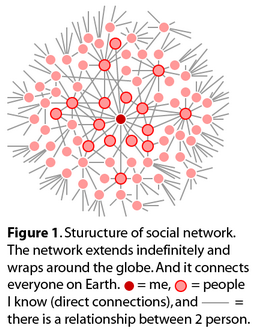
Michael Wu, Ph.D. is Lithium's Principal Scientist of Analytics, digging into the complex dynamics of social interaction and online communities. He's a regular blogger on the Lithosphere and previously wrote in the Analytic Science blog. You can follow him on Twitter at mich8elwu. Welcome back from the Memorial Day long weekend! In my last post, I promised that I’d cover some new topics this time, so I am going to share with you a research project that I’ve been conducting recently on the relationship between social networks and communities. Since 2008, “social media” has become a heavily-used buzz word in the corporate world. The question is “what is social media?” Many seem to equate social media to Facebook-liked social networking sites; others seem to think that they are blogs, the Twitter family of applications for micro-blogging, Flickr, YouTube, or similar type of content sharing Web 2.0 applications. Yet, answers to this question may still range from social collaboration sites (like Wikipedia, Delicious, or Digg) to online communities (like those we host for our enterprise clients or Yahoo! Answer). Well, they are all correct to some extent, and these are functional classifications of social media. Author and blogger Brian Solis, introduced another classification of social media, based on the types of conversation. He called it the conversation prism. However, if you want to understand social media from a relational and social anthropological perspective, you will find that there are really only two major types of social media: Social Networks Online communities Human social networks and communities actually pre-date their online counterpart for millennia. Both are very well-established and robust social structures that have survived the test of time. And they have emerged and reemerged as civilizations collapse and rise. Humans are naturally predisposed to gravitate to and desire this type of interaction. For this initial post of the mini blog series, I hope to offer you a perspective that lets you see some basic differentiating features between these two types of social media. Later on, I will show you what we can learn about them from studies in social anthropology. Social networks Everyone has their own social network (whether online or offline). Everyone has friends, families, and people they are acquainted with. An online social networking site simply makes our social networks visible to others who are not in our immediate network. So the single most important feature that distinguishes a social network from a community is how people are held together on these sites. In a social network, people are held together by pre-established interpersonal relationships, such as kinship, friendship, classmates, colleagues, business partners, etc. The connections are built one at a time (i.e. you connect directly with another user). The primary reason that people join a social networking site is to maintain old relationships and establish new ones to expand their network. With this knowledge, it should be obvious why Facebook, MySpace, and LinkedIn are social networks as opposed to communities. One interesting feature about people’s social networks is that they are extremely unique. It is actually very difficult to fake a Facebook or LinkedIn profile, because your friends (or who you connect to) will collectively identify you. Moreover, because people generally do not compartmentalize their life (unless you are a secret agent for the CIA or some cryptic government agencies), people typically have only one social network. Even for the CIA agents, it could be argued that they have only one social network; it’s just that their network has two or more components that have little overlap. Communities Unlike social networks, communities (both online and offline) are more interesting from a social anthropological perspective, because they often consist of people from all walks of life that seem to have no relationship at all. Yet, as we’ve learned from history, communities are very robust social structures. So what is it that holds these communities together? Communities are held together by common interest. It may be a hobby, something the community members are passionate about, a common goal, a common project, or merely the preference for a similar lifestyle, geographical location, or profession. Clearly people join the community because they care about this common interest that glues the community members together. Some stay because they felt the urge to contribute to the cause; others come because they can benefit from being part of the community. Due to the multifaceted lifestyle of modern living, any individual is often a part of many different communities. Moreover, communities can overlap and are often nested. For example, a geographical community, say a town, may contain sub-communities living in different parts of the town that are connected by a finer geographical granularity. But at the same time, the same town may contain several different ethnic communities that are connected by the ethnicity. Now, do you see why Yelp, Wikipedia, YouTube, Flickr, Digg, the blogosphere, etc., are just communities? Yelp is a community of, originally, food enthusiasts; where as members of the Wikipedia community are passionate about cause of the internet encyclopedia project. YouTube and Flickr are nested communities of video and photography enthusiasts respectively, and they may belong to other sub-communities within the YouTube and/or Flickr community. These sub-communities may simply be your friends and relatives, or people are interested in high dynamics range photography (with 61,000 members) or time lapse videos. In Summary Social Networks (see Figure 1) are: Held together by pre-established interpersonal relationships between individuals. So you know everyone that is directly connected to you. Each person has one social network. But a person can have different social graphs depending on what relationship we want to focus on (see Social Network Analysis 101). They have a network structure. Communities (see Figure 2) are: Held together by some common interests of a large group of people. Although there may be pre-existing interpersonal relationship between members of a community, it is not required. So new members usually do not know most of the people in the community. Any one person may be part of many communities. They have overlapping and nested structure. Now that you know the basic difference between social networks and communities from a relational perspective, next time we can discuss more interesting questions, such as the dynamics of tie formation, or what it means to businesses. I haven’t yet decided what I will write, so let me know if there are any interesting topics that you want me to dig into. In the mean time, comments, questions and critiques are all welcomed. Related Blogs Social Network Analysis 101 How Do People Become Connected? Community vs. Social Networks 2 From Weak Ties to Strong Ties: Community vs. Social Networks 3246KViewsSign in to react to this post44CommentsThe 6 Factors of Social Media Influence: Influence Analytics 1
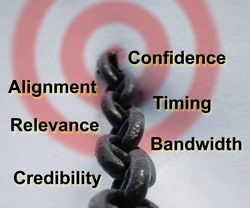
Michael Wu, Ph.D. is Lithium's Principal Scientist of Analytics, digging into the complex dynamics of social interaction and online communities. He's a regular blogger on the Lithosphere and previously wrote in the Analytic Science blog. You can follow him on Twitter at mich8elwu. This post kicks off a multi-post miniseries on the topic of influencers: how to find them, engage them, and collaborate with them in word-of-mouth (WOM) marketing programs. Influence marketing today is in a state of experimentation that scientists call the pre-paradigm phase or exploratory phase. During this phase, everyone is trying different approaches based on experience. There are incomplete theories about why some approaches work and others fail, but there is no underlying fundamental principle that explains everything. My approach in this series is to see if we can gain a deeper understanding by analyzing the process of influence from a data analytics perspective, using a simplified model of social media influence. A Simplified Model of Social Media Influence: Influence involves two entities, which I will refer to as influencer and target. 1. The influencer's power to influence depends on two factors: a. Credibility: The influencer's expertise in a specific domain of knowledge. Please note: There is no such thing as a universal influencer, because no one can possibly be influential in all domains. The best that anyone can hope for is an influencer in a specific domain of knowledge b. Bandwidth: The influencer's ability to transmit his expert knowledge through a social media channel. Please note: Active influencers in one channel may not even be present on another channel. So influencers are not only specific to a domain of knowledge, they are specific to social media channels 2. The target's likelihood to be influenced by a specific influencer depends on four factors: a. Relevance (the right information): How closely the target's information needs coincide with the influencer's expertise. If the information provided by the influencer is not relevant, then it is just spam to the target and will be ignored. b. Timing (the right time): The ability of the influencer to deliver his expert knowledge to the target at the time when the target needed it. There is only a small time window along the decision trajectory when the target can be influenced. Outside this golden window, even relevant content will be treated as spam because there is no temporal relevance. c. Alignment (the right place): The amount of channel overlap between the target and the influencer. If the target is on a different social media channel, then the influencer's information either take too long or never reach the target. d. Confidence (the right person): How much the target trusts the influencer with respect to his information needs. Even if the influencer is credible, the target must have confidence in him. Without trust, any information from the influencer will be downgraded by the target. This model is very general, and it is intended to be applicable to any social media channel. However, it is by no means complete. I just like to use the principle of Occam's razor and start with a simple model that is consistent with the data out there and see how much it explains. We can always add to the model if it proves to be insufficient. As Albert Einstein once said, "Everything should be made as simple as possible, but not simpler." Please note that a lot of attention has been focused on influencers, but very little has focused on their targets. Although it is easier to work with the influencers, we must not forget that it is the targets that we want ultimately. I hope this simple model will help you think about social influence from a more balanced perspective, so that even when we are looking for the influencers and working with them, we still have the targets in mind. Now that you know the basics of how social media influence works, it should not be difficult to diagnose the success or failure of a social media campaign, at least from a data analytics perspective. As shown in the photo above, any broken link between the influencer and the target is enough to break the chain and stall the whole influence process. Next time, I will show you how to take the first step of WOM/influencer marketing: find the influencers. Related Blogs Finding the Influencers: Influence Analytics 2 The Right Content at the Right Time: Influence Analytics 3 Hitting Your Targets: Influence Analytics 4197KViewsSign in to react to this post10CommentsGamification 101: The Psychology of Motivation
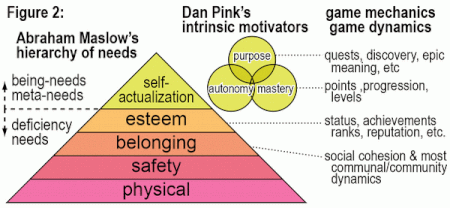
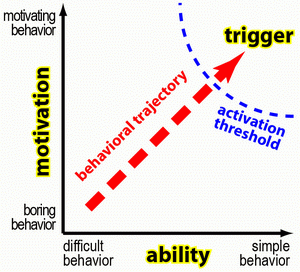
Michael Wu, Ph.D. is Lithium's Principal Scientist of Analytics, digging into the complex dynamics of social interaction and group behavior in online communities and social networks. Michael was voted a 2010 Influential Leader by CRM Magazine for his work on predictive social analytics and its application to Social CRM.He's a regular blogger on the Lithosphere's Building Community blog and previously wrote in the Analytic Science blog. You can follow him on Twitter at mich8elwu. Welcome back! Apologies for taking a little bit longer to write this post. I have been a little busy recently – and I was in Troy, NY last week, giving a series of lectures about Social CRM at RPI. The psychology of motivation is a broad topic, and I will have to be fairly brutal in my summarization and triaging to cut it down to a reasonable length. Last time I briefly introduced Fogg’s Behavior Model (FBM), and used it to analyze why and how game mechanics/dynamics are able to drive actions. FBM asserts that human behavior is a result of the precise temporal convergence of three factors: Motivation: the person wants desperately to perform the behavior (i.e. he is highly motivated) Ability: the person can easily carry out the behavior (i.e. he considers the behavior very simple) Trigger: the person is triggered to do the behavior (i.e. he is cued, reminded, asked, called to action, etc.) Game mechanics and game dynamics are able to positively influence human behavior because they are designed to drive the players above the activation threshold (i.e. the upper right of the ability-motivation axis), and then trigger them into specific actions. In other words, successful gamification is all about making these three factors occur at the same time. As I mentioned last time, the temporal convergence is the key. Today, I will talk about the first factor in FBM: the science of motivation. This topic is not new. In fact there has been a lot of interest and research in the field of psychology around motivation. Subsequently there are many models which describe what can motivate people and why. Since it would be impossible to cover all of them without turning this into a book, I will talk about three psychological models of motivation and behavior that I believe are useful in the gamification setting. From Maslow’s Needs to Pink’s Drive One of the earliest and best known theories of motivation comes from the renowned psychologist, Abraham H. Maslow. The now famous Hierarchy of Needs was published in 1943. I’m sure most of you have seen the pyramid depicting the five levels of needs, in one form or another. Physiological: air, food, water, sex, sleep, excretion, etc. Safety: health, personal well being, financial and employment stability, security against accidents, etc. Belonging: love, intimacy, friendship, family, social cohesion, etc. Esteem: self-esteem, confidence, achievement, respects, etc. Self actualization Maslow believes these needs are what motivate people to do the things they do. In essence, human behaviors are driven by their desire to satisfy physical and psychological needs. It is easy to understand the lower four levels of needs, and Maslow refers to them as deficiency-needs. But what is self-actualization? If you read Maslow’s work carefully, he referred to this highest level as being-needs or meta-needs, and it is actually a combination of many meta-motivators, which I’ve summarize in a word cloud (figure 1). If you think Maslow is a little old school, you might appreciate Daniel Pink’s more recent book, Drive: The Surprising Truth About What Motivates Us, published in 2009. Pink hypothesizes that in the modern society where the lower levels of the Maslow’s hierarchy are more or less satisfied, people become more and more motivated by other intrinsic motivators. These intrinsic motivators are precisely the meta-motivators that Maslow is referring to in the self-actualization level, and Pink specifically focuses on three of these: Autonomy Mastery Purpose If you hadn’t noticed, many of these needs and motivators are very similar to game mechanics and dynamics. Zynga, for example, realizes that majority of the population have the gaming personality of a socializer and need a sense of belonging. They created FarmVille to address the socializer’s need for social cohesion/acceptance. Status, achievements, ranks and reputation are some of the most commonly used game mechanics, but they are really nothing more than “esteem in disguise”. The progression dynamics and levels are simply Dan Pink’s mastery. See the parallel? If not, I hope figure 2 will make it more obvious. Skinnerian Conditioning and Learning B. F. Skinner’s Radical Behaviorism is a very different school of psychology. It is actually a full behavior model, like that of B. J. Fogg, and it claims that human behavior is a result of the cumulative effects of environmental reinforcements and learning. However, much of Skinner’s research on reinforcement and operant conditioning (not classical conditioning) can be applied to understand motivation. Skinner’s theory disregards innate needs and uses only external conditions/reinforcement to manipulate and shape people’s behavior. In essence, the conditioned reinforcers (which are usually some kind of points in most gamification settings) are learned, and they become the motivator. Many game dynamics have been developed using the principles from Skinner’s work, because a point system is often core to many game dynamics, including progression dynamics and levels. Points by themselves are not inherently rewarding – in fact, points can be a detraction if used inappropriately. Proper use of points depends on the reward schedule (or reinforcement schedule in psychology terminology), that is, when, how many, and at what rate the points are given (or taken away). Skinner characterized the effects of many different types of reward schedules on the response rate of the subject (the player) and what actions each type of schedule helps invoke. For example, fixed-interval schedule is great for driving increase activity near deadlines. This is the basis of the countdown and appointment dynamic. Both fixed-interval and fixed-ratio schedules are great for learning new behaviors, but the variable-interval schedule is far more efficient for reinforcing established behaviors. The variable-ratio schedule is best for maintaining a behavior, so it is responsible for many forms of game addiction, including gambling. This schedule emphasizes the importance of surprise in gamification, and it is the foundation for the lottery mechanic and other anticipatory motivators. Flow: The Fine Line between Certainty and Uncertainty I wrote about flow in an earlier post. It is a mental state characterized by another renowned psychologist in 1975, Mihaly Csikszentmihalyi. Flow is an optimal state of intrinsic motivation, where people become totally immersed in what they are doing. People experiencing flow often forget about physical feelings, passage of time, and their ego fades away. Despite the fact that flow is an extremely desirable mental state, it is not easy to get into the state of flow. Part of the reason is because there is an inherent discordance in what people want. In a 2006 TED talk by Anthony Robbins, a popular motivation author, he talked about the six emotional needs of humans. The first is the need for certainty, but paradoxically the second is the need for uncertainty, which is in direct conflict with the first need. It may seem that people are not perfectly consistent, but there is actually a very fine line between certainty and uncertainty, and it is precisely Csikszentmihalyi’s state of flow. For the most part, people love to be in the control (overlearning) state, because it gives them a sense of security and safety. But people also hate boredom. However, as we acquire skills over time, we inadvertently move into the relaxation/boredom state if we don’t pick a more challenging task. So as humans, we are also motivated by some challenges, surprises, and varieties, to avoid boredom. In real life, this often pushes us into the arousal state, because it is usually very hard to find tasks with the right level of challenge that match people’s skills exactly. They are either far too easy (boring) or too hard (frustrating). So the apparent paradox of human motivation is really our attempt to find that fine line between certain and uncertainty. Conclusion So let me summarize what have we learned today: Abraham Maslow (and recently Dan Pink) tells us a lot about what people need, and these innate needs are what motivate people. Maslow's need theory is basically the carrot and the stick theory of motivation. B. F. Skinner on the other hand believes that under a proper reinforcement schedule, we can ignore people’s innate needs and just give them points instead, and people will learn and be motivated simply by accumulating points. Surprising isn’t it? But it is all true! However, blindly giving people points (or whatever they need) is not going to work over the long term, because people get tired and bored rather quickly. Successful gamification need to adapt with people’s skill and find that fine line between certainty and uncertainty (i.e. Csikszentmihalyi’s Flow), a state of optimal intrinsic motivation. Alright, we covered a lot of psychology today. Yet I barely scraped the surface of the psychological research available on motivation. There are many other psychological models of motivation, and what I’ve covered is by no means near complete. I just hope this has given you a quick introduction to the science of motivation. Next time, we’ll examine the second factor of the FBM: Ability. In the meantime, I welcome any comments, critiques, kudos and discussion. Stay tuned! Related Blogs #OnAirWithLithium: Gamification Best Practices What is Gamification, Really? An Interview on The Value of Gamification for Today’s Brands and Consumers175KViewsSign in to react to this post26CommentsThe Magic Potion of Game Dynamics
Michael Wu, Ph.D. is Lithium's Principal Scientist of Analytics, digging into the complex dynamics of social interaction and group behavior in online communities and social networks. Michael was voted a 2010 Influential Leader by CRM Magazine for his work on predictive social analytics and its application to Social CRM.He's a regular blogger on the Lithosphere's Building Community blog and previously wrote in the Analytic Science blog. You can follow him on Twitter at mich8elwu. When I kicked off this short-series on gaming last week I explained the various game related terminologies. Hopefully we are all on the same page now with the basics. If you are still unclear about the difference between game mechanics, game dynamics, and game theory, please take a minute to review Gamification from a Company of Pro Gamers. Now we are ready to talk about the cool and interesting stuff. Despite the ever growing list of game mechanics (and dynamics), there are actually some basic design principles behind all of them. And these principles are surprisingly simple. Once you have mastered these fundamental principles, you would be able to analyze the game dynamics and understand why and how they drive actions. You will also be able to understand why certain game dynamics work better than others in certain situations. Moreover, you can even use these fundamental principles to design your new game dynamics. The Fogg Behavior Model The goal of game dynamics is to drive a user-desired behavior predictably. Therefore we must understand how humans behave, in order to understand game dynamics. And to do this, I’d like to take a psychologist’s perspective and try to understand human behavior though psychological models and frameworks. There are many such models, and they are useful in different contexts, so the criteria for choosing a model/framework should be whether it can give you the understanding you need to address your problem. To understand game dynamics (and gaming mechanics), I will use a simple behavior model by Prof B. J. Fogg of Stanford University, an experimental psychologist I met at the Persuasive2009 Conference. I like Fogg’s behavior model (FBM) because it is a multi-factor model, similar to my 6-factor influence model. It facilitates analysis, construction and deconstruction of game dynamics. FBM asserts that there are three required factors that underlie any human behavior: Motivation Ability Trigger But the most important aspect of FBM is that all three factors must converge at the same time. That means, in order to successfully drive a behavior, the game mechanic/dynamic must guide these three factors so they ALL occur at exactly the same moment. Any temporal misalignment (even if it’s just a few seconds) in these three factors will degrades the effectiveness of the game dynamics. Between Motivation and Ability Game dynamics often motivate people by positive feedbacks, such as accumulation of points, badges, status, progress, customization, pleasant surprises, etc. In theory, negative feedback can also be use, but they are less effective in practice. Negative feedback mechanisms can lead to the complete abandonment of the gamified activity, unless the users are extremely motivated, or used in a social/communal context. So negative feedback should be used with caution. How do game dynamics increase the ability for users to perform the target behavior? I’d like to clarify that, ability doesn’t always mean skills in this context. Ability can be time, attention, mental capacity, or any scarce resources that the user might need to complete the behavior. If a user doesn’t have these resources, he won’t have the ability to carry out the behavior. For the target behavior to happen, users usually require a minimum level of ability and motivation. This minimum level is called the activation threshold for the behavior. There are two general approaches to increase ability. The usual way of increasing a users’ real or perceived ability is through practice and training. So their ability (in conjunction with the proper motivation) would exceed the activation threshold needed to perform the target behavior. This is use frequently in both games and gamification. Another method of increasing a users’ perceived ability is to make the target behavior simpler so users require less ability to accomplish the behavior. This essentially lowers the activation threshold of the target behavior. Although this is also used in games, it is less common in gamification. Perhaps it’s because gamified work is still real work that needs to be done with real abilities. However, there are ways to make the gamified work appear simpler, and these are used frequently in gamification. For example: Divide and conquer (break up a complex job into smaller and simpler tasks) Cognitive rehearsal/guidance (showing you how the job is done and how simple it is) Cascading information (instructions and information are release in minimum snippets to guide you through a multi-stage task). Trigger is ALL about Timing Despite the level of motivation and ability, a trigger at the appropriate time is necessary to bring about a behavior predictably. A trigger is simply something that prompts or tells the users to carry out the target behavior now. It can take any form as long as users are: Aware of the trigger And understand what the trigger means The most important aspect for the trigger is timing. An appropriate trigger at the right moment (e.g. above the activation threshold) not only leads to the inception of the predictable behavior, it also makes the users feel good about doing it. But a poorly timed trigger could have adverse effects. Not only is the behavior not carried out, it might not produce the desired outcome, and on top of that, users can get annoyed, frustrated, and develop a negative emotion about the activity. For example, spam email and pop up ads are, in fact, triggers, as they usually prompt users for some action, and users usually understand what they want and are aware of them. But we hate these triggers, because they usually don’t arrive at the right moment (i.e. when we are motivated and have excess ability). Conclusion So why do game mechanics/dynamics have the magical power to turn boring chores into desirable activities? Game dynamics use positive feedbacks (e.g. points, badges, status, progression, customization, surprises, social factors, etc.) to build up the users’ motivation. They increase the perceived ability of users by making difficult jobs simpler and more manageable; either through training/practice or by lowering the activation threshold of the target behavior. Game dynamics place triggers in the path of motivated users when they feel the greatest excess in their ability. That is, triggers that prompt the user for action are designed to bring about the convergence of motivation, ability, and trigger all at the same moment. This is why game dynamics (and game mechanics) are such effective drivers and manipulators of user behavior. And that is why gamification can turn chores into something fun and enjoyable. It seems magical, but now you know the magic behind it. Alright, enough psychology for today. This is just a brief introduction; we can dive deeper next time. In the meantime let the discussion about gaming psychology begin! See you next time.99KViewsSign in to react to this post12CommentsWhat is Gamification, Really?
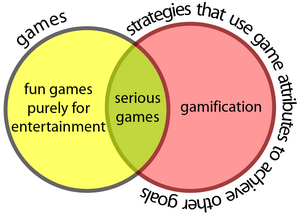
Michael Wu, Ph.D. is Lithium's Principal Scientist of Analytics, digging into the complex dynamics of social interaction and group behavior in online communities and social networks. Michael was voted a 2010 Influential Leader by CRM Magazine for his work on predictive social analytics and its application to Social CRM.He's a regular blogger on the Lithosphere's Building Community blog and previously wrote in the Analytic Science blog. You can follow him on Twitter or Google+. Earlier this month, I was invited to Wharton’s gamification symposium: “For the Win: Serious Gamification.” It was definitely a meeting of the minds with a very diverse group of participants ranging from game designers to policy makers straight from The White House. There were proponents of gamification, and some of the stories are reported on Knowledge@Wharton. Yet, there were also strong critics and opponents of the idea as well (see Gamification is Bull**bleep**). However, the goal is well-intended. We were all there to poke and probe gamification from multiple angles and put it through some of the most rigorous tests. The goal is to figure out what aspects of this idea will actually endure and last. The organizers of the symposium, Prof. Kevin Webach (Wharton) and Prof. Dan Hunter (NY Law School), posed a series of high level questions in the meeting agenda to guide our discussions and debates. Although we didn’t explicitly answer all of them, they were excellent questions that need to be addressed in order to advance gamification beyond its current state of hype. With that in mind, I’d like to spend the next few posts to address most, if not all, of these questions. Q1: What is gamification? I used to casually define gamification as “the use of game mechanics and dynamics to drive game like engagement in a non-game context.” However, after seeing the numerous implementations of gamification at this symposium, I am convinced that the use of only game mechanics/dynamics may be too restrictive. So I’d like to expand the definition a bit. Gamification is the use of game attributes to drive game-like player behavior in a non-game context. This definition has three components: “The use of game attributes,” which includes game mechanics/dynamics, game design principles, gaming psychology, player journey, game play scripts and storytelling, and/or any other aspects of games “To drive game-like player behavior,” such as engagement, interaction, addiction, competition, collaboration, awareness, learning, and/or any other observed player behavior during game play “In a non-game context,” which can be anything other than a game (e.g. education, work, health and fitness, community participation, civic engagement, volunteerism, etc.) Q2: What is it not? Anything that doesn’t fit the definition above is, by definition, not gamification. Clearly, if a strategy is not intended to drive game like player behavior, then it is not gamification, but then you probably don’t need to do anything at all. Strategies that drive game like behavior but didn’t use game attributes or it’s not used in a non-game context are also not gamification. So there can literally be millions of things that gamification is not. I’m not going to list them here, but I will point out a couple that are often confused in the industry and give some explanation. Gamification is not a game. Primarily because the definition specifically states that gamification refers to those applications in a non-game context, where players don’t really know that they are actually playing a game. Furthermore games don’t need to be “gamified” further. It should already be driving game-like behavior (unless it is a very poorly designed game). I like to refer to games that are created to achieve goals other than mere entertainment as serious games. Just to give a few examples, the following are all serious games: There are many educational games that teach various subjects in school through game play. As students play these games, they get practice and reinforcement with a particular concept. As a result, they learn and retain the knowledge better. Games that drive the awareness of certain issues (e.g. environmental) with the ultimate goal to change our behavior through game play Games that solves a different problem as we play the game (e.g. protein folding, etc.) However gamification and serious games are related because both try to leverage aspects of games to achieve something more. A serious game does it through an actual game, but gamification does it through a broader set of tools (e.g. game mechanics/dynamics, game design, gaming psychology, etc.). If we take this perspective, then a serious game can be seen as a subset of gamification. However, the prior definition explicitly excludes this subset from the set of proper gamifications. That is why people are often confused between the two. Gamification is also not the use of prizes (or other external incentives) to drive action. These are merely incentives systems. Although incentives are often used in gamification as a form of game mechanic, they do not constitute gamification by themselves, because not all incentives are good game mechanics. Incentive systems are not new, and people have been using these techniques for hundreds of years throughout school, work, and most of our lives. For example, letter grades, salary promotion, cash bonus, etc. can be seen as a form of incentive systems. However, they are generally not considered as game attributes, because many of these incentives weren’t created with any game design principles in mind. If they are game attributes, they are terrible ones. And this is the reason why there are so many bored students at school and so many dispassionate employees in large enterprises. Conclusion Alright, now that we have a revised and extended definition of gamification, we can address the deeper and more interesting questions at the Wharton Gamification Symposium in the next post. Also, from the limited feedback I received, I get the sense that most people prefer shorter posts. So I will try hard to keep my articles a little more compact in the future. If need be, I will break up the longer articles into short ones and post them separately. BTW, if you feel that gamification deserves the attention and proper treatise at SxSW, I'd like to ask for you help to please vote for my workshop proposal (you may need to create a FREE account to vote). Many thanks in advance, and see you next time.84KViewsSign in to react to this post17CommentsThe 90-9-1 Rule in Reality
Dr. Michael Wu, Ph.D. is Lithium's Principal Scientist of Analytics, digging into the complex dynamics of social interaction and online communities. He's a regular blogger on the Lithosphere and previously wrote in the Analytic Science blog. You can follow him on Twitter at mich8elwu. If you've ever managed a community you've probably heard of the "90-9-1 rule". If you have observed a community closely, you have probably seen it in action. Soon after a community launches, users begin to participate, but each user participates at a different rate. The minute difference in participation levels is accentuated over time, leading to a small number of hyper-contributors in the community who produce most of the community content. The 90-9-1 rule simply states that: 90% of all users are lurkers. They read, search, navigate, and observe, but don't contribute 9% of all users contribute occasionally 1% of all users participate a lot and account for most of the content in the community But how real is this rule? Do all communities follow this rule consistently? If not, how far off is the deviation? Is the proportion really 90:9:1, or is it more like 70:25:5, or 80:19.99:0.01? Let's find out... Lithium has accumulated over 10 years of user participation data across 200+ communities, so we can address this question empirically with rigorous statistics. Rather than complicating the issue with the lurkers, I choose to analyze only the contributors (i.e. the 9% occasional-contributors and the 1% hyper-contributors). The proportion between these two groups of participants should be 9:1 or equivalently 90:10 according to the 90-9-1 rule. The 9-1 Part of the 90-9-1 Rule So the 90-9-1 rule excluding the lurkers says that: 90% of the contributors (which is 9% of all users) are occasional-contributors. 10% of the contributors (which is 1% of all users) are hyper-contributors, who generate most of the community content. What does the data tell us? On average, the top 10% of contributors (the hyper-contributors) generate 55.95% of the community content, and the rest of the 90% (the occasional-contributors) produces the remaining 44.05% of the content. With my statistician hat, you know I can't possibly be satisfied with just the average! So I plotted the distribution of content contributed by occasional-contributors versus the hyper-contributors across all communities. The standard deviation is 13.02%. Please note: The reason you only see 143 communities here, is because I've excluded communities that are less than 3 months old (these communities are too young that their participation dynamics are not stable enough for the analysis). As you can see from the data, the hyper-contributors can contribute anywhere from about 30% to nearly 90% of the community content with an average of 55.95%. This is certainly a substantial percentage (considering the fact that it is generated by only 10% of the contributors), so the 90-9-1 rule "sort of" holds. But, to be rigorous, it depends on what do you mean by "most" of the community content. If "most" meant at least 30% of the community content, then the 9-1 part of the 90-9-1 rule holds for 99.30% of our communities. If you meant at least 40% of the community content, then 89.51% of our communities satisfy this rule. But if "most" meant at least 50% of the community content, then only 65.73% of our communities are described by this rule. Turning the Problem Around This gives us a convenient spot to turn the problem around and look at the 90-9-1 rule from another perspective. We can define rigorously what "most" means (e.g. at least 30% of the community content), then calculate the fraction of contributors who generated these content and treat them as the hyper-contributors. We can then compare and see how far off we are from the expected ratio of 9:1. Averaging across 143 communities, we see that if we define "most of the community content" to be "at least 30% of the total content," then the fraction of participants who contributed this amount ranges from 0.32% to 5.14% with an average of 2.73%. That means, on average, hyper-contributors consist of roughly 2.73% of the contributing population, so the remaining 97.27% of the participants are occasional contributors. And the ratio of hyper- to occasional-contributors is about 97:3, far from the expected value of 9:1. If instead, we define "most" to be "at least 40%" of total content, then we get roughly 5.07% hyper-contributors on average across 143 communities. Now the ratio of hyper- to occasional-contributors is about 19:1, which is closer but still quite far off the expected ratio of 9:1. If we defined "most" to be "at least 50%" of the total content, then the group that contributed this amount (which qualifies them to be hyper-contributors) is about 9.35% of the participants. This gives us a ratio that is much closer to the expected value of 9:1 on average. However, the variability is also very large. Even under this simple criterion of contributing at least 50%, the fraction of participants who contributed this amount may vary from less than 1% to ~18% of the participants. That means the ratio between hyper- and occasional-contributors may be anywhere from 99:1 to about 5:1. So is 90-9-1 a hard and fast rule? Definitely not! Not even the 9-1 part of it. But it is certainly a great rule of thumb when looking at or explaining community data. And it tells us that participation in communities is highly skewed and unequal, and there is a small fraction of hyper-contributors who produce a substantial amount of the community contents. Next time I am going to start to dive deeper into the contribution level of the hyper-contributors, your community's real superusers.78KViewsSign in to react to this post17CommentsFrom Weak Ties to Strong Ties: Community vs. Social Networks 3
Michael Wu, Ph.D. is Lithium's Principal Scientist of Analytics, digging into the complex dynamics of social interaction and online communities. He's a regular blogger on the Lithosphere and previously wrote in the Analytic Science blog. You can follow him on Twitter at mich8elwu. Last time I talked about the first stage in any relationship: The formation of a weak tie or, how people become connected. It turns out that weak ties can form pretty much anywhere (in communities and through social networks). If you don’t know the factors that govern the formation of weak ties, or don’t know the difference between a community and a social network, I recommend you reading the following posts in this miniseries before diving into this one. Community vs. Social Network How Do People Become Connected? The Value of Strong Ties vs. Weak Ties Creating a weak tie is the first and the easiest step in any relationship. Other than kinship, nearly all other social relationships start as weak ties. One can argue that even kinships start out weak, and it is only through the frequent family gatherings and interactions that kinships develop into strong relationships. The only difference is that we can’t choose the connections in our kinship. But, we can still choose to what extend we develop these kinships (i.e. whether we want to maintain them as strong ties, or just leave them as weak ties). Since it is the strong ties that are most valuable, the important question is how does a weak tie grow into a strong tie? For the record, I want to state that I am not saying weak ties are not valuable. They definitely do have value. However, the value of weak ties does not lie within the ties themselves, but in their sheer number and diversity. A good example is when you are looking for a job. Your close friends (strong relationships) will probably go through great length and spend a lot of time to help you. But since you only have few close friends, they might not be able to get you a job because none of them can find a job opening matching your skill set. In contrary, your acquaintances (weak ties) probably will only spend few minutes to forward your resume to their HR. But you can have many more acquaintances then close friends. Since one success is all you need, by having many weak ties, the odds that one of them would finds something suitable can be quite high. Essentially, having a large number of weak ties enables us to crowdsource our weak ties for help. The value of strong ties is in the relationship. And their value is far greater than any number of weak ties that you can put together. Just ask yourself, are you willing to trade any of your close friends with 10 acquaintances you met online? How about 100 or 1000? I wouldn’t; definitely not! Strong relationships take a long time to build and they are irreplaceable. I don’t think I need to give you any examples on this. Social Networks Need Communities to Build Tie Strength Although weak ties can form in both communities and social networks, tie strength are built up predominantly in communities. Certainly, most of my close friends (strong relationships) are people who share some common communities with me at some point in my life. These communities may be neighborhoods where I grew up, schools that I attended, research labs where I’ve worked, or special interest groups, such as photography club and badminton club. Although I often meet new friends of friends (through my personal social network), without a community to develop these shallow relationships, our “friendship” would remain purely as acquaintance. Take a look at some of the most successful social network services (SNS), such as Facebook (FB) and LinkedIn. They were created around a natural community where shallow relationships between their members can grow and strengthen over time. For FB, these communities are initially colleges and universities, and later spread into the corporate world. For LinkedIn, these natural communities are companies, professional societies, and industry associations. This is also true in online communities. I’ve certainly gotten to know a few people quite well on Lithosphere (Lithium’s online community about community) and the various LinkedIn groups that I’ve joined. Having a common topic of interest where we can discuss, debate, and learn from each other, is crucial to the development of our relationship. The combination of frequent engagement, deep interaction, and time spent together is what builds strong relationships within communities. As a result, some of these community acquaintances have become my friends. Therefore, successful social networks must have some form of community for their members to interact and build their relationships. Without communities, social networks are merely glorified phonebooks and contact lists. It didn’t take long for SNS providers to figure this out. As a result, we can expect to see an increase effort for SNS companies to build out their community solutions. In fact, FB groups, fan pages, and LinkedIn groups were early attempts to build communities within the social network. They are indeed communities according to the characteristic differences that were layout in Community vs. Social Network. These groups and fan pages are certainly interest focused, and new members who join them may not know the other members in them People can be part of many groups and fan pages Groups and fan pages can certainly overlap, and some groups may have subgroups (i.e. nested) These groups and fan pages provide community-like interactions, such as sharing news and discussions on the SNS platform. However, these community building interactions are very limited, and they are often inefficient for cultivating strong relationship. The recent launch of FB community page provides further evidence in support of this theory. Conclusion So the message for today’s post is simple. The value of strong ties is the relationship itself The value of weak ties is in their number and diversity Community (online or offline) is where the weak ties are developed into strong relationships. Although social networks are the hot thing right now, we must not forget the role of communities in building tie strength. In my next post, I will cover Stage 3, the maintenance of strong ties. Until then, I welcome any discussion. Related Blogs Social Network Analysis 101 Community vs. Social Network How Do People Become Connected? Community vs. Social Networks 276KViewsSign in to react to this post11CommentsHow Do People Become Connected? Community vs. Social Networks 2
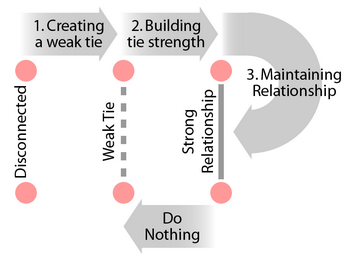
Michael Wu, Ph.D. is Lithium's Principal Scientist of Analytics, digging into the complex dynamics of social interaction and online communities. He's a regular blogger on the Lithosphere and previously wrote in the Analytic Science blog. You can follow him on Twitter at mich8elwu. In my last post, I outlined some basic differences between social networks and communities from a social anthropological perspective. If you didn’t see that post I recommend you take a quick read of my previous article: Community vs. Social Network, as I’ll expand on that thinking here. Today, I will continue our mini-series on the dynamics and interplay between communities and social networks. You will recall from my previous blog post that individuals in a social network are held together by pre-existing interpersonal relationships. Today, we will investigate how those pre-existing relationships were established on the first place. Lifecycle of Relationships One of the areas I touched on previously was that social networks connect every single person on this planet. Moreover, research has confirmed the validity of a popular urban myth: six degrees of separation urban myth. Recent data and calculation suggests that most people are actually within 6 to 7 degrees of each other, so this myth still holds up in the modern web 2.0 era. Therefore you can, theoretically, reach and connect to any one of 6.8 billion people on this planet in relatively few steps. In reality, people don’t connect to the whole world. In fact, people don’t even connect with everyone who is living in the same city, going to the same school, or working in the same company as them. What prevents people from connecting? To understand this, let’s break down the lifecycle of any relationship into three stages: Creating the Weak Ties: This is the first stage in any relationship Building the Tie Strength: This cultivates the weak ties into strong relationships Maintaining the Relationship: This will prevent strong relationships from eroding and reverting back to weak ties. Note: The kinds of connections that I will focus on are bidirectional, mutual and reciprocating ties, because these are the ties that can be developed into strong relationships. For these to happen, both entities must agree to connect for the tie to form. The entities that are connected by these ties are usually people, but they may be organizations, companies, or even countries. The Desire to Connect is a Basic Requirement In all three stages, both entities must have the desire to further the relationship. If any party becomes uninterested or finds the relationship not worthwhile, the process will halt and the relationship will not move to the next stage. That is, the tie may never be created, or the tie may remain remains weak (if it has already been created), or the tie strength may be weakened and revert back to a weak tie (if it has already been developed). So how do people choose which tie to form, which one to develop and, which to maintain? This is a non-trivial problem, and is currently a subject of intense research. Many social network formation models have been proposed and studied recently. All of them are based on Game Theory, a very challenging branch of mathematics that models rational human behavior and strategic choices. Note: The great mathematician, John F. Nash (who was the subject of the Hollywood movie: A Beautiful Mind) received the Nobel Prize in Economics for his research on Game Theory. Clearly, a full treatise on this topic is way beyond the scope of this blog. For simplicity, you can think of people’s choice as a result of a cost-benefit analysis of the action they are about to take. What does that mean? For example, in creating a weak tie, both entities will analyze the cost (or risk) and benefit of creating such a tie, as long as both feel that the benefit out weights the risk, they will proceed and create the tie. This is a very interesting topic, so I will revisit this topic with greater details in a later post. For now, just remember that all three stages of relationships development involve a choice that depends on the two persons’ desire to connect. If people don’t want to connect, no ties can be created. Creating the Weak Ties Besides the personal desire to connect, there are environmental factors that can affect tie formation by limiting people’s ability to reach each other. Clearly, if the environment precludes two persons from ever encountering each other, then there is no way a tie can form between them. There are basically only two mechanisms that people can meet and connect. Communities (online or offline) Social Networks Mechanism 1: Community For centuries, community has always been the place where people congregate and it is the place where social ties initially form. Years of social anthropological observation tell us that the majority of relationships in our social network were first established in some sort of communities. Certainly, most of my friends are people that I grew up with (in my neighborhood community), went to school with (in my campus community), my colleagues (in the same professional community), and fellow researchers (in the same research community). These are people who share some common communities with me at some point in time, and these communities can be geographical, cultural, interest-based, and/or institutional. Therefore, sharing a set of communities (both online and offline) in common becomes the primary factor that will determine whether people can encounter. If the two people do not share any common community, then it would be impossible for them to form ties via this mechanism. The more communities these two people have in common, the greater the chance for them to encounter each other. This will increase the probability of tie formation between them. Mechanism 2: Social Network The second mechanism that people can meet is through our friends, colleagues, relatives (i.e. our personal social network). Again, a social anthropologist would say that this is again nothing new. Indeed, humans have been doing this since they were caveman. What is new though, is that Social network services (SNS) made it very easy for people to explore and discover the relationships that are normally unknown to them. Let me illustrate this with an example. Let’s say I have a friend, Dave. I know Dave pretty well, but I may not know all of Dave’s friends. Jen is a friend of Dave, but I don’t know Jen. If I don’t see Dave and Jen hanging out together in any social context, I may never know that Dave and Jen actually know each other. But, with SNS, I can explore Dave’s network and discover that he’s connected to Jen. Subsequently, I may ask Dave to introduce us and become connected to Jen. This scenario is one that many people traditionally called social networking – the technological enablement of which has spawned our whole industry. Although SNS greatly facilitates the process of social networking, there are still limitations. Even though it is possible to reach anyone on this planet through social network in about 6 or 7 degrees, in practice it is pretty difficult to actually reach people who are more than 3 degrees apart from you. So the primary factor that will determine whether people can connect through social network is the network distance (the degrees of separation) between the two persons. In Summary So what have we learned so far about how people become connected? 1. Weak ties can pretty much form anywhere. They are created: a. In communities (which are everywhere) and b. Through social networks (which cover the entire planet) 2. The formation of weak ties between two people depends on a. Their desire to connect (this is a very interesting topic that I will cover in greater depth in a future post) b. The amount of communities they shared in common c. The network distance (degrees of separation) between them Next post, I will look at the second stage and try to understand how weak ties are developed into strong relationships. In the mean time, this is a pretty meaty topic, so I welcome any comments, questions or thoughts you might have.51KViewsSign in to react to this post10CommentsIntrinsic vs. Extrinsic Motivation—Clearing the Fog (not Fogg!)
As promised, I’m back with more blogs and today we’ll talk about gamification. Before we get into the details—a quick announcement. I will be giving a 3 hour workshop—in addition to the closing keynote—next week at the Virtual Community Summit. The conference will be held at the Royal Institution of Great Britain in London. So if you are in London, please stop by and say hello. Now, back to gamification. Ever since I started writing on gamification, the topic of motivation came up countless times. It is a natural connection, because motivation is the primary driving force behind human actions. Consequently, many psychology research papers are devoted to this topic. Motivation is also one of the three necessary factors in the Fogg’s Behavior Model that underlies all human behavior. Despite the fact that good gamification must drive the temporal convergence of motivation, ability, and trigger, most gamification applications focus solely on motivation. Some even proposed renaming “gamification” to “motivational design.” But many people are still very confused about what is motivation, and how it differs from rewards. What precisely is the difference between intrinsic vs. extrinsic motivation? And how is that different from intrinsic vs. extrinsic rewards? Motivation is a very old and deep subject. Hundreds and probably thousands of books have been written about it. Even within the academic communities, there are many psychological constructs and theories that attempt to understand human motivation. So this short post is by no means complete. However, I do hope it will guide you down the right path in your own exploration of this fascinating topic, and perhaps clear some of the fog around this topic. The Proper Context for Motivation Motivation is anything that drives us to do something. When a psychologist talks about motivation, it is usually in the context of a specific behavior or action—motivation to do what? Unfortunately, this is different from our everyday usage of the word “motivation.” We often refer to motivation as a characteristic of a person. For example, you may hear a manager complimenting a particular colleague as being very motivated. What he really meant was that his colleague is very motivated about work related behaviors (e.g. coming to the office on time, responding to client inquiries, addressing their problems, documenting his algorithms, or whatever the person’s work might be). I bet this particular colleague is probably NOT motivated to watch a movie in the middle of his work day, take out the garbage, do his laundry, or other behaviors not related to work. Likewise when we compliment a certain student as being very motivated, we really mean he is motivated to learn or to carry out any behavior related to learning in school. This particular student is probably not very motivated to sleep all day, skip class, or do any non-school related activities. People are rarely motivated to do everything. In fact, I doubt a truly “motivated person” (i.e. someone who is motivated to do everything) even exists. So we should learn from the psychologists and talk about someone’s motivation in reference to a behavior or activity, and not view it as a personal trait of the individual. Intrinsic vs. Extrinsic Motivation Because we often think of motivation as a personal trait, we make the mistake of thinking that intrinsic motivation as intrinsic to the person (i.e. it originates from within the person). This is incorrect and has confused many practitioners of gamification. Intrinsic motivation is simply the desire to perform a behavior/activity for its own sake, like a hobby (e.g. reading, painting, singing, playing a game, even coding for some engineers). It means you would do that activity for no other reason besides the love and joy of doing it. Intrinsic motivation refers to any motivation that is intrinsic to the behavior or activity, not intrinsic to the person. However, most intrinsic motivations are very personal (e.g. solving math problem may be intrinsically motivating to me, but it may be depressing for others). However, there are four characteristics of intrinsic motivations that are quite universal: Autonomy: people have full control over when and to what level they want to carry out the activity Mastery (i.e. competence or progress): people can get better at the activity Relatedness: people can relate to others who are also doing the activity Purpose: people recognize the importance meaning of the activity Extrinsic motivations are all other reasons that drive us to do something. That means we perform the behavior for reasons other than the love of doing it. Extrinsic motivation refers to any motivation that is extrinsic to the behavior or activity. There are many extrinsic motivations because we do things for many different reasons (e.g. get paid, received rewards, gain status, gain influence, receive praise, peer pressure, mitigate risk, avoid punishment, etc.). All are extrinsic motivations for doing something. Many extrinsic motivations are perfectly good and noble reasons, too. For example, getting good grades can be an extrinsic motivation for reading if you don’t already love to read, because you are doing it to get good grades, not because you just love to read. And there is nothing wrong with wanting to get good grades. Likewise, people spend much time sharing content on social media for many wonderful reasons (e.g. connect with like-minded individuals, curate content, etc.) as well as other more selfish reasons (e.g. self-express, gain attention and recognitions, etc.). These are all extrinsic motivations for sharing, because they didn’t share simply because they like to share. If there is something else that helps you achieve those reasons more effectively, you would probably do that instead of sharing on social media. Conclusion Motivation is anything that drives us to carry out a behavior or activity. Although many people like to think of motivation as a personal trait, motivation should be viewed in reference to a behavior or activity. So when we speak of motivation, intrinsic doesn’t mean inside the person and extrinsic doesn’t mean external to the person. Rather intrinsic (or extrinsic) motivation means whether the reason that drives someone to do something is intrinsic (or extrinsic) to the behavior or activity. Now we understand the difference between intrinsic vs. extrinsic motivation. Next time, we can start the discussion on the difference between intrinsic vs. extrinsic reward. Although reward and motivation are very different, few gamification practitioners can articulate the subtle difference between intrinsic rewards and intrinsic motivations. Stay tuned for the next blog, and we’ll continue to lift the fog on this topic. Michael Wu, Ph.D. is Lithium's Chief Scientist. His research includes: deriving insights from big data, understanding the behavioral economics of gamification, engaging + finding true social media influencers, developing predictive + actionable social analytics algorithms, social CRM, and using cyber anthropology + social network analysis to unravel the collective dynamics of communities + social networks. Michael was voted a 2010 Influential Leader by CRM Magazine for his work on predictive social analytics + its application to Social CRM. He's a blogger on Lithosphere, and you can follow him @mich8elwu or Google+.51KViewsSign in to react to this post10Comments